
The True Cost of Prop Firm Challenges: Hidden Fees Every EA Trader Must Know
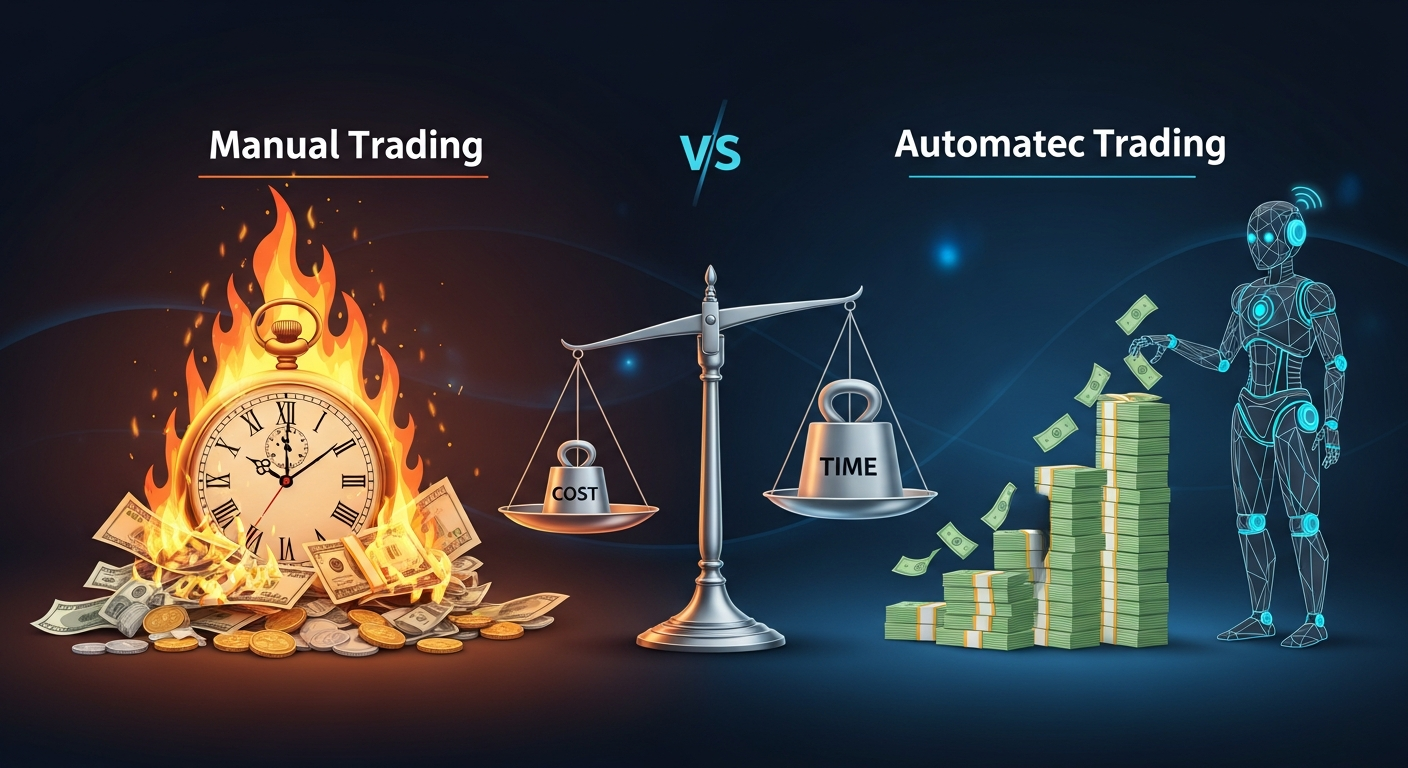
Table of Contents
The Full Cost Picture Most Traders Miss
The evaluation fee advertised on the prop firm's website looks like a straightforward investment. You pay 600 dollars, your prop firm ea passes the challenge, you receive your funded account, and the economics proceed from there as planned. This mental model is incomplete in ways that matter financially, particularly for traders who are budget-constrained in the early stages of building their prop firm operation.
Experienced prop firm EA traders who have been operating for more than six months know the true cost structure intuitively because they have paid all of these expenses already. First-time traders almost universally underestimate total costs because the evaluation fee gets all the marketing attention while the supporting infrastructure costs live in documentation and forum posts rather than on landing pages. This guide makes the complete cost structure explicit so you can build an accurate financial plan before committing your first dollar rather than discovering additional expenses mid-operation.
The good news framing this analysis: when all costs are properly accounted for, the total investment required to reach the first funded account payout remains quite modest relative to the ongoing income the funded account generates. The economics are genuinely attractive. But understanding the full picture eliminates financial surprises that can feel discouraging when they appear unexpectedly during what should be an exciting process.
March 2026 Update
Q1 2026 has brought meaningful fee structure changes across several major prop firms. FTMO quietly reduced its reset fee by approximately 10 percent in February, citing competitive pressure from newer entrants. FunderPro introduced a zero-reset-fee policy for accounts that fail within the first five trading days, recognizing that early failures are often setup errors rather than strategy failures - a distinction that significantly lowers the true cost of entry for first-time traders.
On the cost-reduction side, competition in the VPS market has continued to push prices downward. New York and London latency-optimized VPS plans that cost $40 to $50 per month in 2025 are now readily available from reputable providers at $28 to $35. For traders running multiple funded accounts, this reduction compounds meaningfully. One newer development worth watching: two prop firms have begun including a basic VPS credit with funded account activation, effectively eliminating that line item from the ongoing cost structure for funded traders who use the firm's preferred broker.
Why Accurate Cost Estimation Matters
Traders who underestimate total costs sometimes make suboptimal decisions mid-operation: choosing a cheaper but inferior EA to save money, skipping a VPS to avoid the monthly cost, or panic-abandoning a working strategy after unexpected expenses appear. Knowing the complete cost structure upfront allows you to budget correctly, commit to the full operational investment without surprises, and make rational decisions about cost trade-offs from a position of complete information.
Evaluation Fees: What You See and What Is Behind It
The evaluation fee is the most visible cost and the one most thoroughly covered in prop firm marketing. But several nuances are worth understanding to extract the maximum value from your evaluation fee investment.
Fee Refund Policies Are Not Universal
FTMO refunds the evaluation fee in your first funded account payout. This is a genuine economic benefit that makes FTMO more cost-efficient than it first appears. Pay 600 for the evaluation, pass it, receive your first payout which includes the 600 refund plus your proportion of trading profits, and your net evaluation cost is effectively zero. Not all firms offer this. The Funded Trader and E8 Funding do not refund evaluation fees on passing. When evaluating the total cost of access to funded capital across different firms, the refund policy is a meaningful factor that deserves explicit inclusion in the comparison.
Multi-Phase Fee Structures
Standard evaluations include two phases under a single fee. You pay once and the fee covers both Phase 1 and Phase 2. There is no additional charge to progress from Phase 1 to Phase 2 once you have started. Some variation exists in the market - certain firms have offered single-phase challenges at a price premium, and a few have experimented with three-phase structures - but the standard model is a two-phase evaluation under a single purchase price.
Currency Exchange and Payment Processing Costs
FTMO prices evaluations in euros. If your bank account is in US dollars, British pounds, or another currency, your bank or payment processor applies a conversion rate with a spread that represents an additional cost. This is typically one to three percent of the transaction amount. For a 600-euro evaluation, that is six to eighteen dollars in conversion cost. Use a service with competitive foreign exchange rates - bank-issued multi-currency cards, Wise, or similar services - to minimize this cost rather than paying your bank's standard retail conversion rate.

Discount Periods and Promotions
Major prop firms periodically offer evaluation fee discounts of 10 to 30% during promotional periods around holidays, their anniversary dates, or in response to competitive pressure. If your timeline is flexible and you are not in a rush to start an evaluation, monitoring for these discount periods can meaningfully reduce your upfront cost. Some community forums and email lists specifically track these promotional windows. The savings on a 200,000 evaluation could be 150 to 300 dollars during a 15 to 20% discount period - worth waiting a few weeks for if you have the flexibility.
Reset and Retry Costs: Planning for the Inevitable
No EA has a 100% pass rate in all market conditions. Even exceptionally well-configured algorithms have evaluation failure rates of 10 to 30% depending on the strategy's risk profile and market conditions. Planning for these failures and budgeting their cost into your per-funded-account total cost calculation is essential for accurate financial projections.
FTMO's Free Retry Policy
FTMO offers one free retry after a Phase 1 or Phase 2 failure under specific eligibility conditions. To qualify, the breach must be of the daily loss limit or maximum drawdown rules (not a consistency rule violation), and the request must be made within a defined timeframe after the breach. The free retry resets your account to the starting balance with fresh time limits, effectively giving you another full evaluation at no additional cost. This is a substantial benefit that reduces the effective cost of failed evaluations significantly. For a trader with a 20% EA failure rate, FTMO's free retry means roughly half of those failures cost nothing - only the failures that do not qualify for the free retry or occur after it has been used require a new fee.
Paid Reset Options
When the free retry is exhausted or the failure does not qualify, a new evaluation requires purchasing again. Most firms offer discounted re-enrollment for previous customers who failed, typically 50 to 70% of the original price. This discount makes the financial consequence of a subsequent failure more manageable than it might initially appear. When budgeting for a new prop firm operation, include at least one paid retry cost in your initial budget as a contingency reserve. If your EA performs without needing it, that reserve becomes additional operating capital. If you do need it, you are not financially surprised by the expense.

Phase 2 Failure Specifics
Phase 2 failures are particularly frustrating from a psychological standpoint because you have already successfully completed the harder Phase 1. However, the financial consequence depends heavily on the firm's retry policy. At FTMO, a Phase 2 failure qualifies for the same free retry as a Phase 1 failure. At firms without a free retry, failing Phase 2 after already paying for the full evaluation means you must repurchase - sometimes at a discounted retry price, but still a real additional cost. Understanding your specific firm's Phase 2 failure policy is worth verifying explicitly before starting an evaluation.
EA Software and VPS Infrastructure Costs
These are the cost categories that prop firm marketing consistently ignores because they are infrastructure rather than the firm's own service. They are also where many first-time traders encounter budget surprises that make the initial stages of building a funded account operation feel more expensive than anticipated.
EA Purchase Cost
Quality prop firm EAs with verified track records, active development teams, and comprehensive documentation typically cost between 200 and 600 dollars for a license. Some developers use subscription models at 50 to 150 per month rather than one-time purchases. The subscription model has higher long-term cost for traders who plan to use the EA for years, but provides the advantage of guaranteed ongoing updates and support without an additional fee for each new version.
Free EAs, including those available on the MQL4 and MQL5 Marketplaces at no cost, are almost universally inferior to paid alternatives for prop firm challenge use. They typically lack firm-specific configuration, active developer support, and the constant updating required as firm rules evolve. The cost difference between a quality paid EA and a free one is recovered almost immediately after the first successful funded account generates its first payout. Treating the EA cost as an infrastructure investment rather than an optional expense produces consistently better outcomes.
VPS Monthly Costs
A dedicated Windows VPS for EA trading costs between 20 and 60 dollars per month depending on specifications, provider, and geographic location. For a single account, the minimum viable setup - 2GB RAM, single core, Windows Server, located near your prop firm's servers - runs approximately 20 to 30 monthly. For running two to three accounts on a single VPS, upgrading to 4GB RAM typically adds 5 to 15 monthly depending on the provider but allows you to serve multiple accounts without performance degradation.
Over twelve months, VPS costs total 240 to 720 dollars depending on configuration. This is a genuine recurring expense that reduces your net monthly income from funded accounts. Build it explicitly into your financial model rather than treating it as a rounding error. For detailed guidance on choosing the most cost-effective VPS for your specific situation, see our dedicated guide on the best VPS options for forex EA trading in 2026.
Processing and Data Costs
Several smaller cost categories are worth accounting for even though none is individually large enough to significantly affect the overall economics of a prop firm operation.
Withdrawal Processing Fees
Bank wire transfers for international withdrawals typically carry fees of 15 to 50 dollars per transaction regardless of the amount being transferred. For small or frequent withdrawals, these fees meaningfully reduce net income. Cryptocurrency withdrawals are generally free or carry minimal fees (typically under 5 dollars) from most major prop firms. If your country's banking system makes crypto withdrawals practical, using crypto for payouts is the most cost-efficient withdrawal method available. PayPal and similar services occupy a middle ground with fees typically of 1 to 3% of the transaction amount up to a maximum, which can be better or worse than bank wires depending on the payout amount.
Premium Historical Data for Backtesting
If you want to thoroughly validate your EA's settings using the highest-quality historical tick data before committing to live evaluations, premium data providers like Dukascopy or specialized tick data services offer comprehensive historical databases for 50 to 200 dollars depending on the currency pairs and time period covered. This is typically a one-time research investment rather than an ongoing cost, and it is only relevant if you are actively developing or optimizing EA settings rather than running a pre-configured purchased system.
For traders using a purchased EA from an established developer who provides their own backtest evidence, this data cost is generally unnecessary. The developer has already performed this optimization using appropriate data. Your investment in data is most valuable when you are actively customizing EA parameters for a specific firm's rules or market environment.

Building Your Complete Break-Even Calculation
With all cost categories identified, you can construct an accurate break-even calculation for your prop firm EA operation. Here is a worked example for a trader starting with one 100,000 FTMO evaluation.
Complete Cost Breakdown: $100K FTMO Evaluation
At $3,200/month net income from the funded account, break-even occurs in approximately 5 weeks of funded trading. The investment economics are genuinely compelling once the system is correctly configured and operational.
Practical Cost Reduction Strategies
Once you understand the complete cost structure, several deliberate decisions reduce total costs meaningfully without compromising operation quality.
Prioritize firms with fee refund policies. This is the single most impactful cost reduction available. Getting your 600 evaluation fee back in the first payout transforms the economics dramatically - you effectively accessed funded capital for the cost of EA software and VPS hosting alone. FTMO's refund policy should be weighted heavily in your firm selection analysis, not treated as a secondary feature.
Purchase multi-account EA licenses upfront. If your plan involves eventually operating four or five funded accounts, buying a multi-account license package when you make your initial purchase typically saves 30 to 50% compared to buying individual licenses incrementally. Most developers offer these packages and the discount is genuine rather than nominal.
Optimize VPS utilization before adding instances. Run two accounts per VPS wherever performance allows rather than provisioning a separate VPS for each account. A 4GB RAM VPS running two MetaTrader instances performs indistinguishably from two 2GB VPS instances for normal EA trading purposes, at roughly the same cost or less. Test the performance before assuming you need dedicated instances for each account.
Use cryptocurrency for withdrawals. Eliminating bank wire fees of 25 to 50 dollars per payout saves 300 to 600 dollars annually on monthly payouts. Over a multi-year funded account operation, this is a non-trivial saving that requires only a basic familiarity with receiving crypto into a reputable wallet.
For the optimal account size strategy that maximizes the fee-to-income ratio, see our dedicated analysis of choosing the right prop firm account size for EA trading.
The Bottom Line on Total Cost
The complete all-in cost of starting a prop firm EA operation with one 100,000 account - accounting for EA purchase, three months of VPS, expected retry costs, and the fee refund - runs approximately 400 to 600 net dollars. This total investment is recovered in six to eight weeks of funded account payouts. The economics are genuinely compelling. The key is knowing the complete picture upfront so you budget correctly, commit fully, and avoid the frustration of unexpected expenses that derail traders who planned only for the headline evaluation fee.
Evaluating the True Value of Each Dollar Spent
The most useful mental framework for evaluating any cost in a prop firm EA operation is to compare it against the income that cost enables. A 600 evaluation fee that enables a 3,200 per month income stream is a sound investment by almost any standard - the fee is recovered in under three weeks of trading. A 350 EA purchase generating income continuously across multiple accounts for years is an even more favorable ratio. A 30 monthly VPS subscription that ensures the system runs reliably 24/7 - preventing downtime that could cost you an entire evaluation fee - is a self-evidently worthwhile operating expense.
The only costs that genuinely deserve scrutiny are those that do not enable proportional income. Course subscriptions that produce no measurable improvement in EA selection or configuration. Unnecessary premium data purchases for strategies that do not require high-frequency backtesting. Multiple software licenses when a single multi-account license covers the same need at lower total cost. These warrant critical evaluation, but they represent the minority of costs in a well-structured operation.
The overall economics of a properly structured prop firm EA operation remain genuinely favorable when all costs are accounted for honestly. Understanding the complete picture clearly - rather than being surprised by costs as they appear - allows you to commit to the full investment with confidence and focus your energy on the factors that actually determine success: EA quality, configuration discipline, and consistent execution of a reinvestment strategy that compounds your funded capital base into meaningful long-term income.
Related Articles
Best Prop Firm Challenges for EA Traders in 2026: Updated May Rankings
Not all prop firm challenges are created equal for automated trading. We rank the top 6 evaluations by EA compatibility, rule strictness, fee value, and real-world pass rates - updated with May 2026 changes.
Prop Firm Payouts in Your Local Currency: A Global Trader's Guide for 2026
Your dashboard balance is not the same as the amount that reaches your bank account. This global guide covers payout methods, currency conversion, fees, records, and planning for traders in every region.
Prop Firm Profit Split Comparison 2026: Which Firm Pays EA Traders the Most? [Updated April 2026]
An 80% profit split sounds generous until you compare it against a 90% competitor. But the headline number is only one dimension of the income comparison. Here is the complete payout analysis EA traders actually need.