
Prop Firm EA Lot Sizing Guide 2026: How to Set the Right Risk Per Trade
Table of Contents
Why Lot Sizing Decides Evaluations
Ask any experienced prop firm ea trader what the most common cause of evaluation failure is, and they will not say the EA's entry logic or its news filter or its drawdown management. They will say lot sizing. Specifically: lot sizing that was set too aggressively for the account tier or the firm's rules, leading to a single bad run of trades exceeding the daily loss limit before the evaluation even reached week two.
The mechanics are straightforward. A prop firm evaluation with a 5% daily loss limit on a $100,000 account means you cannot lose more than $5,000 in a single trading day. If your EA is configured with 0.5% risk per trade and typically takes 4 to 6 trades on an active day, that is roughly 2.5% to 3% of the account at risk on any given session - comfortable headroom. But if someone has bumped the risk-per-trade setting to 1.5% thinking the faster profits will speed up the evaluation, a bad 4-trade run costs 6% of the account. One bad day, and the evaluation is over.
What makes this problem particularly damaging is that it is invisible during setup. An EA configured with 1.5% risk per trade looks identical to one configured with 0.5% until the moment the market moves against it. The lot size inputs are a few settings buried in the EA panel, and new traders frequently either leave them at defaults without understanding what those defaults represent, or adjust them manually based on intuition rather than mathematics.
The Core Lot Size Calculation
The correct lot size for any single trade is determined by three inputs: your account balance, your chosen risk percentage, and the number of pips to your stop loss on that specific trade. The formula is:
Lot size = (Account balance × Risk %) ÷ (Stop loss in pips × Pip value per lot)
For a standard forex pair with a $100,000 account, risking 0.5%, with a 30-pip stop loss: (100,000 × 0.005) ÷ (30 × 10) = 500 ÷ 300 = 1.67 lots. That is the maximum position size that risks exactly 0.5% of the account on this specific trade with this specific stop. If the stop loss changes on the next trade - say, 50 pips instead of 30 - the lot size must change too: (100,000 × 0.005) ÷ (50 × 10) = 500 ÷ 500 = 1.0 lot.
A well-configured forex robot performs this calculation automatically on every trade entry, scaling position size to the current stop distance in real time. This is what makes dynamic lot sizing superior to fixed lot sizing: the risk stays constant as a percentage of the account regardless of what the stop distance on any individual trade happens to be.
The pip value calculation varies by pair. For EUR/USD, GBP/USD, and most major pairs quoted against the USD, pip value is $10 per lot for a standard lot. For pairs where USD is the base currency (USD/JPY, USD/CHF), pip value changes with price and needs to be computed differently. Most MT4 and MT5 platforms expose the correct pip value through their built-in functions, so a properly built EA will pull the real-time pip value rather than using a hardcoded constant.
What Risk Per Trade to Start With
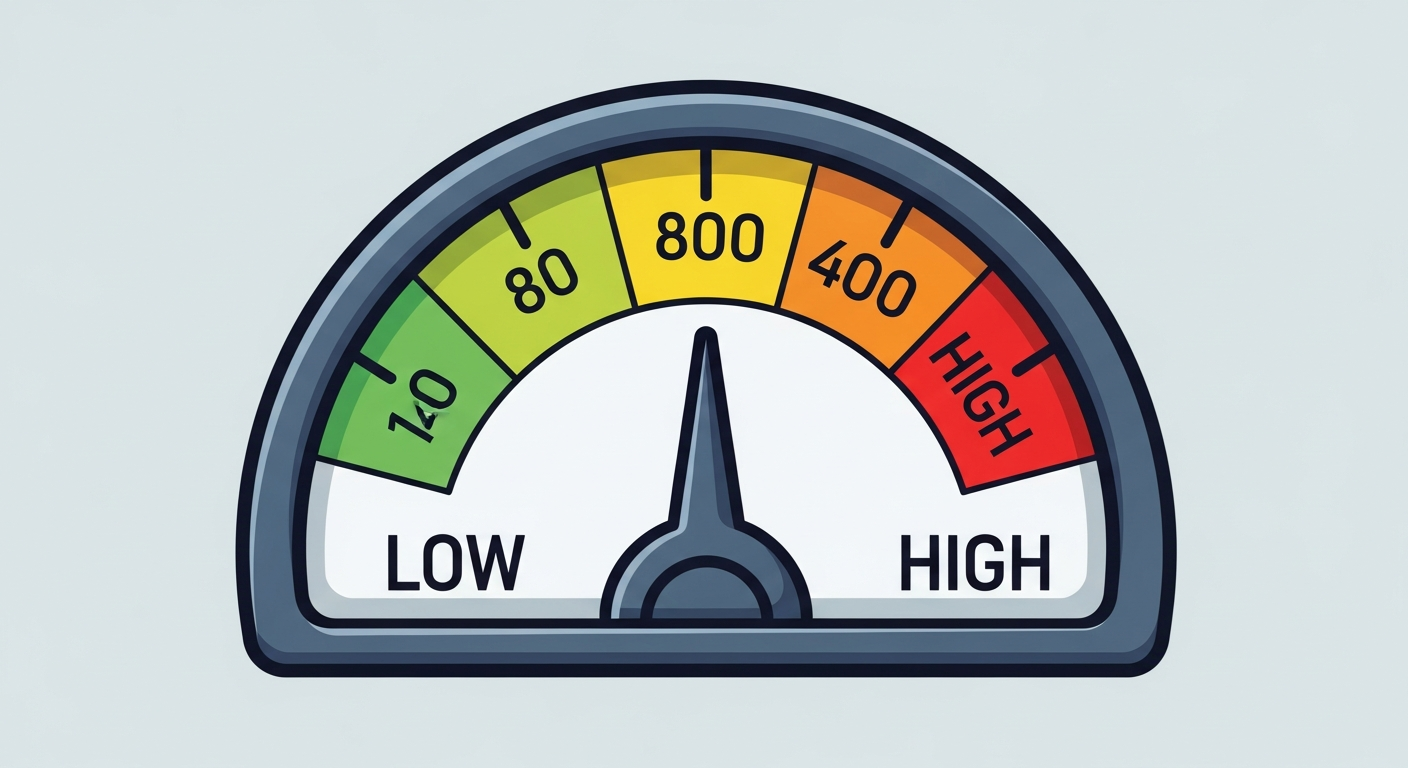
The right risk-per-trade percentage for a prop firm evaluation depends on how many trades the EA takes per day, the firm's daily loss limit, and whether the strategy has any built-in correlation between trades. A general starting framework that works well across most evaluation types:
Conservative (recommended for first evaluation): 0.5% per trade. At 4 trades per day, this is 2% maximum daily exposure. Leaves a 3% buffer before hitting a 5% daily loss limit. Gives the EA room to absorb 10 consecutive losing trades without breaching the standard maximum drawdown of 10% overall.
Moderate: 0.75% per trade. Works well with strategies that take 3 trades or fewer per day. At 4 trades, daily exposure hits 3%, still inside a 5% limit but with less margin. Only appropriate if you have verified through live trading that the EA rarely takes more than 3 active positions in a session.
Aggressive (not recommended for evaluation phase): 1.0% or above. The math on a bad day at 1% with 5 trades is a 5% account loss in one session - exactly at the daily limit. Any trade that takes a few extra pips of slippage before hitting its stop will push past it. For fully funded accounts on loose daily drawdown rules, 1% can be appropriate. For evaluation accounts with 5% daily limits, it is too close to the boundary.
The formula for checking your settings: multiply your EA's average trades per day by your risk percentage. If that number exceeds 3%, your settings are not appropriate for a standard evaluation with a 5% daily limit.
Adjusting for Account Size and Firm Rules
The principles above apply regardless of account size, but the specific numbers that feel comfortable shift as accounts scale. A $10,000 account with 0.5% risk means $50 per trade - a number that produces meaningful but not alarming loss sequences. A $200,000 account at 0.5% risk means $1,000 per trade. If the EA strings together 6 losing trades in one afternoon, that is $6,000 in realized losses. The percentage is the same, but the psychology and the absolute drawdown figure are different.
For larger account tiers, many experienced forex trading ea traders reduce their percentage risk rather than keeping it fixed. A common approach: use 0.5% for accounts up to $50,000, then drop to 0.35% for $100,000 accounts, and 0.25% for $200,000. The absolute dollar risk per trade is still meaningful (0.25% of $200,000 is $500 per trade), but the strategy's drawdown curve smooths out considerably and the daily loss limit gives much more comfortable headroom even during rough sessions.
Firm-specific rules can also change the calculation. Some firms use an equity-based daily drawdown, meaning unrealized losses count toward the daily limit even before they are closed. An EA with a wide stop loss and multiple open positions can technically trigger an equity drawdown breach even if no trades have been closed. For these firms - FTMO being the clearest example with their trailing balance drawdown during evaluation - the lot sizing calculation needs to account for the maximum simultaneous open drawdown, not just closed losses.
Lot Sizing When Compounding or Scaling
Once you have passed an evaluation and are trading a funded account, the lot sizing question evolves. You have two choices: fixed lot sizing based on the original account balance, or dynamic lot sizing that scales as your balance grows through compounding. Both are valid, and the choice depends on your income goals and risk tolerance.
Fixed lot sizing - keeping your risk per trade tied to the original balance rather than the current balance - is more conservative. As your account grows, your absolute dollar exposure stays flat and your percentage risk actually decreases relative to current equity. If you are prioritizing capital preservation and targeting steady monthly withdrawals, this approach is lower variance.
Dynamic lot sizing - recalculating position size based on current balance each time - means your lot sizes grow as the account profits. A $100,000 account that grows to $110,000 will open slightly larger positions on the next cycle. Over time, this produces compounding-style account growth. The risk is that drawdown sequences also become slightly more expensive in absolute terms as the account grows, so traders who choose dynamic sizing need to be comfortable with that relationship.
Most quality EAs allow you to configure which approach you want through a simple toggle. When in doubt during an evaluation, use fixed sizing tied to the starting balance - it is the simplest approach to reason about and the easiest to explain if you are asked by the firm about your strategy.
Firm-by-Firm Configuration Notes
FTMO: Uses a trailing balance maximum drawdown during the evaluation phase. This means if your account starts at $100,000, hits $103,000, and then pulls back to $91,700, you breach the drawdown - even though you started at $100,000 - because the trailing high was $103,000 and 10% below that is $92,700. Always ensure your EA's lot sizing leaves adequate buffer for this trailing behavior, not just the starting balance.
E8 Funding: Uses a static balance drawdown - the 8% maximum drawdown is calculated from the original starting balance and does not trail. This makes lot sizing more straightforward to reason about: as long as your EA cannot lose more than 8% from the starting equity in total, you are safe. You can be slightly more aggressive with per-trade risk at E8 because there is no trailing high that compresses the available drawdown as you profit.
Alpha Capital: Also uses a static drawdown from starting balance. 10% maximum overall, 5% daily. The daily limit here is the critical one - make sure your maximum potential daily exposure is well below 5% before starting an evaluation.
FundedNext: Uses a balance-based drawdown (not equity), which means floating losses do not count toward the limit until a trade is closed. This is more forgiving for strategies that hold trades through drawdown before recovering. For EAs with wider stops and longer hold times, FundedNext's drawdown structure is worth considering specifically for this reason.
The Most Common Lot Sizing Mistakes
Using fixed lot sizes instead of percentage-based risk: Fixed lots ignore the account's current state. An EA set to 0.1 lots per trade risks 1% on a $10,000 account but only 0.05% on a $200,000 account - or if the account has grown, the same fixed lot represents a now-lower percentage than intended. Always use percentage-based risk when configuring for prop firm evaluations.
Failing to account for all simultaneously open positions: If your EA can open 3 positions at once, and each is sized at 0.5% risk, the theoretical simultaneous drawdown is 1.5% from those 3 trades alone. During high-correlation market conditions, all 3 could hit stops at the same time. Your per-trade risk needs to account for the maximum realistic number of simultaneous open positions.
Copying settings from a different account size: Settings files and presets from other traders are configured for their specific account balance and risk tolerance. A trader running 0.3% on a $200,000 funded account who shares their settings file is giving you lot sizes that will feel extremely conservative on a $25,000 evaluation - or could be too aggressive if that trader had their own nuanced reasons for the number they chose.
Not adjusting for news events or abnormal spreads: Some traders set lot sizes based on normal spread conditions, then discover their EA enters a trade during a news event when spread is 8 pips instead of the usual 0.3 pips. The stop loss is effectively hit immediately by spread alone, producing a full-risk loss from a trade that never had a real chance. Ensure your EA has news filter logic before relying on any lot sizing calculation.
Increasing lot sizes mid-evaluation to recover drawdown: This is the most dangerous mistake. A trader who has lost 4% of their account and tries to recover quickly by doubling lot sizes is now one bad day from breaching the 5% daily limit. The math goes from uncomfortable to catastrophic. If your EA has entered a drawdown during an evaluation, the correct response is to let it run its strategy at the configured settings, not to manually intervene with more aggressive sizing.
Lot Sizing Built Into the EA
Prop Firm EA includes built-in dynamic lot sizing that calculates the correct position size for each trade automatically based on your account balance, selected risk percentage, and current stop distance. All firm-specific presets come pre-configured with recommended starting risk values verified against that firm's daily and total drawdown limits. No manual calculation required.
Visit PropFirmEA.comFor related reading, see our full guide to prop firm drawdown rules and our breakdown of EA settings optimization for maximum pass rate.
Related Articles
Prop Firm Profit Split Comparison 2026: Which Firm Pays EA Traders the Most? [Updated April 2026]
An 80% profit split sounds generous until you compare it against a 90% competitor. But the headline number is only one dimension of the income comparison. Here is the complete payout analysis EA traders actually need.
Best Prop Firm Challenges for EA Traders in 2026: Updated May Rankings
Not all prop firm challenges are created equal for automated trading. We rank the top 6 evaluations by EA compatibility, rule strictness, fee value, and real-world pass rates - updated with May 2026 changes.
Prop Firm Drawdown Rules Explained: Trailing vs Static and What They Mean for Your EA
Trailing drawdown and static drawdown are not the same thing, and confusing them is one of the most expensive mistakes EA traders make. This guide explains both types clearly and shows you exactly how to configure your EA for each.