
How Prop Firm EAs Handle High-Impact News Events Without Triggering Rule Violations

Table of Contents
July 2026 Update
Forex Factory's economic calendar API - which the EA uses for real-time news detection - updated its event tier system in late June 2026, adding a distinct "High-Volatility Fed" category that flags FOMC meetings separately from standard high-impact events. The EA's news filter now applies a 90-minute pre-event and 45-minute post-event blackout for this category, extended from the standard 30/30 window used for NFP and CPI releases. This update is applied automatically - no configuration changes required for existing users.
FTMO clarified in their June 2026 FAQ update that positions opened before the restricted window and held through a news event are permitted, provided they were entered at normal spread conditions. This distinction matters for EA strategies with longer hold times: the firm's rule targets entries during the volatility window, not positions already running. The EA's current logic is already aligned with this interpretation.
Why News Events Are Dangerous for EA Evaluations
The Non-Farm Payrolls report drops at 13:30 UTC on the first Friday of every month. In the two to three minutes before and after that release, the EUR/USD pair can move 80 to 150 pips in a single direction. Spreads on major pairs widen from their normal 0.2 to 0.5 pips to as much as 10 to 20 pips for the moments immediately surrounding the release. Stop loss orders execute at prices well beyond their intended levels because the market has moved past them before the broker can fill. For a prop firm trader with a strict 5% daily loss limit, this environment is genuinely treacherous in ways that even experienced manual traders respect.
For a prop firm passing ea, the danger compounds. An EA cannot read a Reuters headline, sense the tension building in the market before a release, or make a situational judgment call about whether holding a position through this particular news event is worth the risk. It can only respond to price action and the programmed signals it has been configured to recognize. Without specific news event handling logic, an EA running a standard trend-following strategy through an NFP release can find itself deep in a losing position within seconds - potentially violating the daily loss limit or breaching the maximum drawdown in a single chaotic five-minute period.
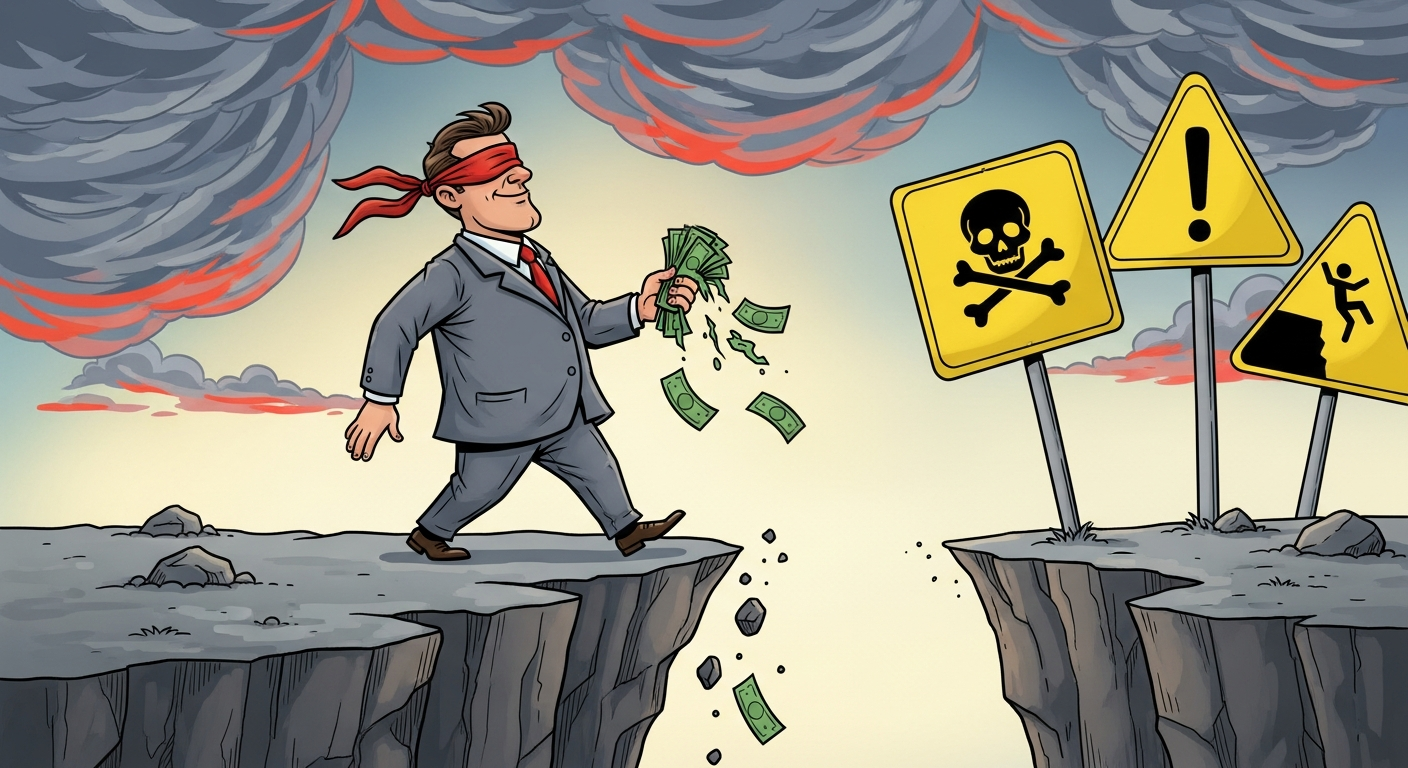
This is precisely why news event management is one of the most critical features to evaluate in any prop firm EA you are considering. How the robot handles the window surrounding a high-impact release can determine whether a well-configured evaluation that was progressing beautifully ultimately passes or fails on a single volatile Friday morning. Let us go through how this works in full detail.
The High-Impact Events That Matter Most
Non-Farm Payrolls (US, first Friday monthly). Consumer Price Index (US, EU, UK - monthly). Federal Reserve interest rate decisions (eight per year). European Central Bank rate announcements. Bank of England decisions. GDP release figures from major economies. Initial Jobless Claims (weekly, smaller but still impactful). These events consistently produce the most extreme short-term market reactions and require specific handling logic in any EA designed for prop firm use.
What Prop Firm Rules Actually Say About News Trading
Prop firm rules on news trading are more nuanced than the simple yes/no question most traders approach them with, and they differ significantly between the evaluation phase and the funded account phase in ways that create an important configuration consideration for EA traders.
During Evaluation Phase
Most major prop firms, including FTMO, The Funded Trader, and E8 Funding, explicitly permit news trading during their challenge evaluations. There are no blanket prohibitions on holding positions through high-impact releases or placing trades around news events during the evaluation phase. The risk of news trading during an evaluation is purely the risk of financial loss from the volatility - if the EA loses enough to violate the drawdown or daily loss rules, the evaluation fails. But the failure is a normal rule violation, not a terms-of-service violation.
During Funded Account Phase
The rules often change in meaningful ways once you transition to a funded account. FTMO specifically restricts what they call "news trading exploitation" on funded accounts. Their language targets strategies that deliberately position immediately before high-impact releases to exploit the spread widening and initial volatility spike rather than to capture genuine market direction. Strategies that happen to be in trades that coincide with news events are not generally restricted. The distinction is between intentional exploitation and incidental exposure, but the language is sometimes broad enough that traders interpret it differently from the firm's actual intent.

The practical implication for EA traders who plan to use the same algorithm on both their evaluation and their funded account: configure news avoidance for the most extreme events as a baseline standard rather than trying to maintain different configurations for different account types. If your EA consistently avoids trading in the 30 to 60 minutes surrounding tier-one events, it will comply with all major prop firm rules across both evaluation and funded account phases without requiring you to reconfigure between phases.
How EAs Detect Upcoming News Events
Quality prop firm EAs use one or more of several approaches to detect and respond to upcoming high-impact news events. Each approach has different reliability characteristics, different maintenance requirements, and different levels of automation.
Economic Calendar API Integration
The most sophisticated and reliable approach is direct integration with an economic calendar data API. Services like ForexFactory, DailyFX, and several specialized financial data providers offer machine-readable calendar data that EAs can query automatically. The EA downloads the current week's scheduled events, filters for high-impact releases that affect the pairs it trades, and builds a blackout schedule of times when it will not open new positions or will close existing ones.
This approach is highly reliable and fully automated once configured. The EA adjusts its news schedule every week without any manual intervention from the trader. The downside is that it requires network access from the VPS to the calendar API provider, and the developer must maintain the API integration as providers occasionally update their data formats. Premium quality EAs from established developers typically use this approach as their primary news detection mechanism and have redundant fallback data sources in case the primary API becomes temporarily unavailable.
Manual Calendar File Input
A simpler but less automated approach uses a configurable file that the trader manually updates each week with upcoming news event dates and times. The EA reads this file at startup and applies the blackout periods it specifies. This approach has zero external dependencies and works even in restricted network environments, but it puts the responsibility of calendar maintenance on the trader. Miss updating the file before a major NFP release and the EA will trade through it without protection. For traders who are disciplined about weekly maintenance tasks, this approach is reliable. For traders who tend to set and forget their systems, it creates a recurring risk of missed updates.
Volatility-Based Reactive Detection
Some EAs take a reactive rather than predictive approach. Instead of using calendars, they monitor real-time spread widening and price movement velocity as signals that an unusual market event is underway. When spreads exceed a configurable multiple of their normal value, or when price moves more than a configurable percentage within a short time window, the EA interprets this as evidence of high-impact news and automatically pauses new entries or tightens stops on existing positions.
This approach works reasonably well for limiting damage after news volatility begins but has a fundamental limitation: by the time the EA detects extreme volatility and responds, a position that was open before the event may already have been significantly damaged. Reactive detection is better than nothing but is clearly inferior to predictive calendar-based avoidance for protecting against news-related losses in an open position before the event occurs.
The Best Practice Combination
The most robust EA news management systems combine predictive calendar-based avoidance with reactive volatility detection as a fallback. Calendar-based avoidance handles the known scheduled events. Volatility detection catches unscheduled market-moving events like unexpected central bank commentary, geopolitical developments, or data releases that were not on the calendar. The combination provides comprehensive coverage against both types of news risk.
The News Avoidance Strategy
The most common and arguably most reliable approach in quality prop firm EAs is pure news avoidance: the EA detects upcoming high-impact events, closes any open positions before they occur, and does not open new positions until a configurable recovery period after the release has passed.
Standard Avoidance Windows
The typical avoidance window in quality EA implementations runs from 30 to 60 minutes before a high-impact release to 30 to 60 minutes after it. During this window, the EA is completely inactive on any pairs that the news event is likely to affect. For USD-impacting events like NFP or FOMC decisions, this means essentially all major pairs involving the USD - EUR/USD, GBP/USD, USD/JPY, USD/CHF, and so on. For EUR-impacting events from the ECB, EUR/USD and EUR crosses are affected.
The pre-event window exists to allow any open positions to be closed at reasonable pre-news market conditions rather than during the chaotic moments immediately surrounding the release. Closing a position 45 minutes before NFP means closing into a liquid, normally-spread market. Trying to close it 30 seconds before NFP means potentially closing into spreads that are already beginning to widen as institutional players position ahead of the release.
The Opportunity Cost Question
The obvious question about pure avoidance is: what about all the profitable trades that occur during news volatility? This is a legitimate concern for traders whose EAs are configured aggressively and whose evaluation timeline is tight. Post-news momentum trades - where the market moves strongly in one direction following a release and maintains that direction for hours - can be among the most profitable setups available. An EA that avoids all news-adjacent activity misses these entirely.
The counterargument, and the one that governs most quality prop firm EA design, is that the expected value of news avoidance is positive for evaluation success. A 30-pip win from a post-news momentum trade is worth less in expected value terms than the risk of a 150-pip loss from a position that was caught on the wrong side of a major surprise release. For prop firm evaluations where capital preservation is the primary goal, asymmetric downside protection generally outweighs upside opportunity cost.
The News Trading EA Strategy
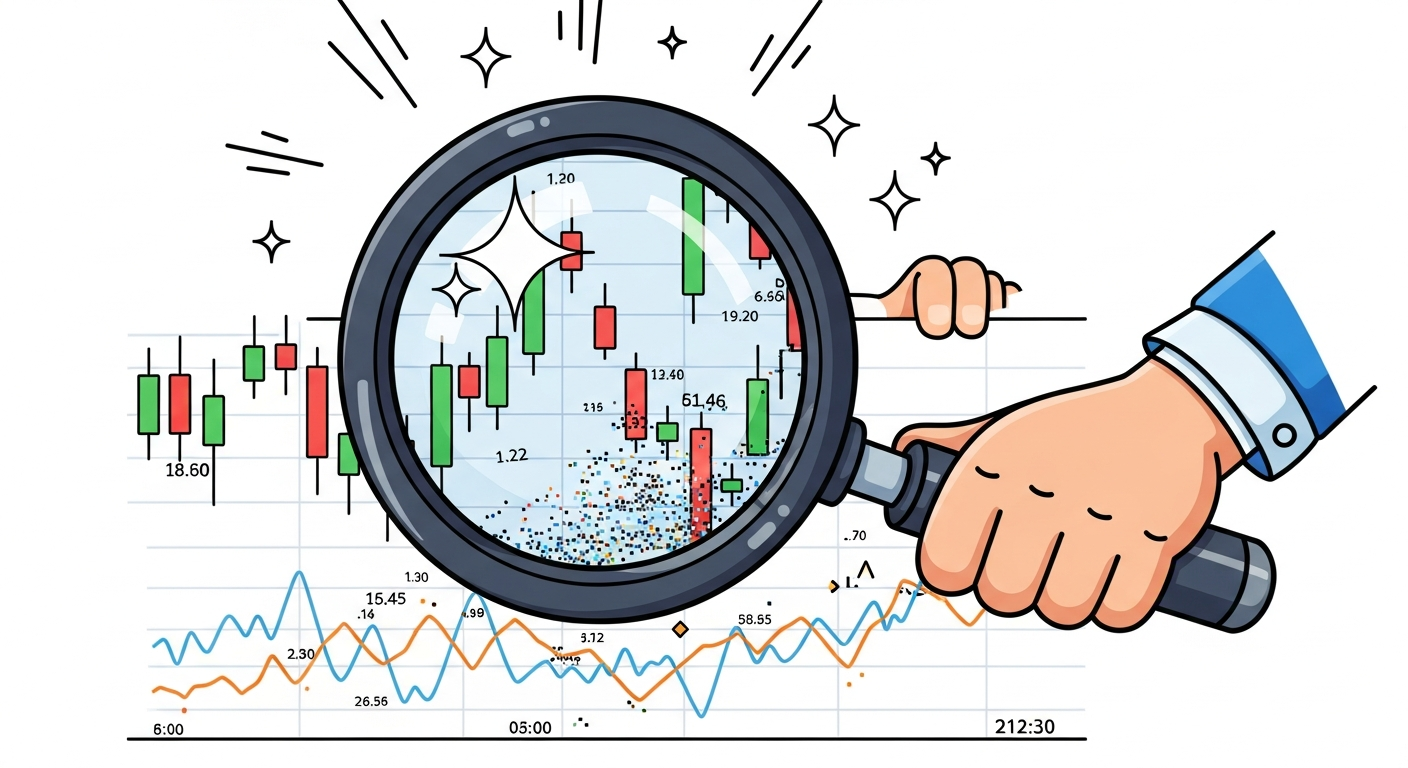
Some EAs are specifically designed to trade news events rather than avoid them. These news-trading algorithms position to profit from the directional movement that follows major releases by using pending orders placed above and below the current price before the event, with the expectation that the market will break out strongly in one direction and carry the triggered order to a profitable exit.
The Mechanics of News EA Trading
A news-trading EA typically places a buy stop order some number of pips above the current price and a sell stop order the same number of pips below it shortly before a major release. When the news drops and the market moves sharply, one of the pending orders triggers and the other is immediately cancelled. The triggered order rides the initial momentum with a predetermined profit target and a stop loss. If the market reverses sharply after the initial move, the stop loss limits the damage.
The fundamental execution challenge is that in the seconds immediately following a major release, spreads widen dramatically and order fills become unpredictable. An order set to trigger at 1.0850 may actually fill at 1.0870 or 1.0890 due to the rapid price movement between submission and execution. This slippage can turn a calculated-risk trade into an unexpectedly large loss or eliminate a profitable trade's expected value entirely.
Prop Firm Considerations for News EAs
Prop firms, particularly FTMO, are specifically alert to news-trading patterns on funded accounts. While genuine directional trading around news is permitted during evaluations, strategies that appear designed primarily to exploit spread behavior or specific broker execution characteristics during news events are subject to review on funded accounts. Any news-trading EA should be built around genuine market direction capture rather than infrastructure exploitation to remain compliant across all firm types.
The Hybrid Approach Quality EAs Use
The most sophisticated prop firm EAs implement a tiered news management approach that balances risk protection with trading opportunity preservation. The logic works across three impact tiers with different responses to each.
For tier-one events - NFP, FOMC decisions, CPI releases from major economies - the EA enters full avoidance mode. All positions are closed at least 60 minutes before the release. No new positions are opened until 60 minutes after the release at minimum, sometimes 90 minutes. No exceptions exist for favorable market conditions or tight evaluations timelines. The potential damage from these events is large enough that the opportunity cost of avoidance is always worth bearing.
For tier-two events - regional manufacturing data, housing figures, trade balance reports, non-major central bank speeches - the EA may continue normal operation but with reduced position sizing and tighter stop loss settings. The expected market impact is lower, the directional effect is less dramatic, and the risk of a devastating single-event loss is meaningfully smaller than for tier-one events. Reducing risk rather than eliminating trading is the appropriate response.
For tier-three events - minor regional statistics, speeches by non-voting central bank officials, second-tier economic reports - the EA trades normally. The expected market reaction is too small to justify any modification to the standard trading approach.
For more context on how this tiered approach connects to the broader risk management framework for prop firm evaluations, read our detailed guide on understanding prop firm drawdown rules and our analysis of how EAs protect accounts from weekend gaps and spread risk.
Configuring Your EA for News Events
If your EA includes built-in news management features, the configuration process is generally straightforward but requires attention to a few specific details that determine whether the protection actually works as intended.
Verify the time zone configuration first. Your EA's news avoidance triggers are based on the scheduled event times from a calendar source. The calendar times are typically in GMT/UTC. Your EA's internal clock is based on your MetaTrader server's time zone, which may be GMT+2 or GMT+3 depending on the time of year and the broker. If your EA's time zone offset is configured incorrectly, the news filters will activate at the wrong times - potentially leaving you unprotected during actual events and blocking trading at completely irrelevant times instead.
Set minimum avoidance windows: 30 minutes before and 30 minutes after for standard high-impact events. For tier-one events like NFP and FOMC, extend this to 60 minutes in both directions. Run your configured EA through a demo account across at least two major news events before starting any live evaluation to verify the avoidance logic is triggering correctly and closing positions at the expected times.
News Configuration Testing Protocol
The most reliable way to verify news configuration is to run a demo account through a live NFP or FOMC release with your EA active and monitor what happens in real time. Check: Does the EA close all open positions at the correct time before the release? Does it stop opening new positions during the avoidance window? Does it resume normal operation at the correct time after the post-event recovery period? All three behaviors must work correctly before you trust this configuration on a live evaluation account with real fees at stake.
When testing news configuration on a demo account, check whether the EA's Friday close logic operates correctly alongside its news filters. Some EAs have separate settings for these two protection mechanisms and the interaction between them can produce unexpected behavior if configured independently without verifying they do not conflict. A news event on a Friday afternoon should trigger both the news filter and the Friday close, with no positions remaining open after either mechanism has acted. Verify this interaction explicitly rather than assuming the two systems coordinate correctly by default. Reviewing your EA developer's documentation on how session protection and news avoidance filters interact is a five-minute step that prevents significant evaluation losses from edge cases that only manifest on Friday afternoon event windows.

Related Articles
Best Prop Firm Challenges for EA Traders in 2026: Updated May Rankings
Not all prop firm challenges are created equal for automated trading. We rank the top 6 evaluations by EA compatibility, rule strictness, fee value, and real-world pass rates - updated with May 2026 changes.
Prop Firm Profit Split Comparison 2026: Which Firm Pays EA Traders the Most? [Updated April 2026]
An 80% profit split sounds generous until you compare it against a 90% competitor. But the headline number is only one dimension of the income comparison. Here is the complete payout analysis EA traders actually need.
Prop Firm Consistency Rules 2026: What They Are and How EAs Handle Them Automatically
Consistency rules catch funded traders by surprise more often than almost any other rule. This guide explains exactly how they work at each major firm and how a well-configured EA prevents violations without you needing to intervene.