
Automation, calendars, and funded-account controls
Top 10 News Trading EAs & Filters for Funded Traders
News automation can pause an otherwise sound system, but it cannot replace a current reading of the firm agreement, the calendar, or real execution conditions.
Explore the full prop firm ea review homepage.

Introduction: what this Top 10 actually answers
The direct answer to the title is that the best news trading EAs and filters for funded traders are usually the ones that make fewer decisions, not the ones that promise to capture every red-folder candle. A news trading EA prop firm setup must survive a contract, a broker feed, a platform clock, spread expansion, slippage, and a trader’s own operating mistakes. This page ranks ten MQL5 Market listings that can illustrate those jobs: calendar-aware pauses, trade controllers, and event-oriented automation. It is not a claim that any listing will pass an evaluation, preserve capital, or qualify for a payout. A filter is a risk-control component, while a directional news robot is a speculative strategy that may be unsuitable where a firm restricts event trading.
Funded traders should begin with the firm’s current written terms, then ask support a precise question in writing: may positions be opened, closed, modified, or left open during named high-impact releases on this account type and at this stage? The answer can differ between evaluation and funded accounts, instruments, platforms, and programme versions. Official firm sources, not affiliate summaries or old Discord screenshots, are the authority. Some firms permit normal trading but prohibit opening or closing within a stated window; others allow news trading subject to general execution rules; others apply different rules to simulated and live stages. Terms change. Save the date, URL, account type, and support reply.
This guide uses high impact news filter MT4 as a practical phrase, but MT4 is not a universal calendar environment. MetaTrader sees broker-server time, whereas many public calendars present UTC or convert into your browser’s local time. A release at 13:30 UTC can be 15:30 on a UTC+2 server, then shift when daylight-saving conventions change. Test the exact offset on the exact broker server. Global traders also need to verify country eligibility, payment method availability, identity checks, withdrawal rails, currency conversion, and local legal or tax treatment before buying an evaluation or EA. See prop firm EA guidance and automation rules and restrictions before treating software as a solution.
- Use an event filter to reduce unwanted exposure, not to imply certainty.
- Treat calendar feeds, listing descriptions, ratings, prices, and reviews as changeable.
- Confirm the funded-stage rule separately from the challenge-stage rule.

How the ten MQL5 listings were selected
Every product link below is a direct MQL5 Market product page. The ranking does not convert a marketplace position, star rating, reviewer count, price, publication date, or seller statement into independent proof of performance. Those values can change after publication and should be inspected on the live listing. The order instead favors a funded-trader workflow: a clear operational purpose, a plausible way to test it on demo, controls a user can audit, and a warning where a product’s behavior must be reconciled with prop firm news trading rules.
A useful comparison separates three categories. First are filters and controllers, whose primary job is to stop, close, or manage trades around calendar windows. Second are panels that combine a calendar with execution tools and need careful interaction testing. Third are news-entry EAs, including breakout or straddle logic. The third category carries the highest policy and execution risk. A firm can view attempts to exploit a scheduled release very differently from an ordinary position that happened to be open beforehand. That distinction matters more than attractive historical tester output.
A listing is never a substitute for due diligence. Read the inputs, manual, comments, version history, activation terms, supported terminal version, and refund conditions before purchase. Test on a demo account with the same symbol suffixes, leverage, commission model, and approximate server time. Then test failure modes: disconnect the calendar source, restart the terminal, widen the spread, remove permission to trade, and see whether the existing EA remains safe. Our broader selection criteria appear in prop firm EA comparisons and the EA evidence framework.

Prop firm news trading rules come before the settings
The phrase prop firm news trading rules sounds singular, but there is no industry-wide rule. Read the firm’s official prohibited-strategy page, FAQ, agreement, programme rules, and any announcement that applies to your account. Look for exact language covering macroeconomic announcements, high-impact releases, major speeches, rollover, weekend holding, pending orders, modifications, profits generated inside a window, and instruments connected to the release. If a policy gives a number of minutes, find out whether it is measured from scheduled time, actual release time, server time, or another clock.
Do not infer permission merely because an EA can be attached to MT4 or MT5. Firms often distinguish permitted automation from behavior that creates abnormal execution dependency, latency exploitation, copied signals, or coordinated accounts. An event EA that places opposing pending orders moments before CPI may be technically possible yet contractually unacceptable. Conversely, a conservative filter that prevents entries can be compatible with a rulebook, provided it does not attempt prohibited closure or modification during a restricted window. Ask whether managing an existing position is allowed and keep the reply.
This is particularly important for traders comparing firms from different regions. A programme may not accept residents of every jurisdiction, may require a specific identity document, or may pay through providers unavailable in your country. Payouts can also create banking, currency-conversion, business-registration, consumer-law, or tax questions. None of those issues is solved by a high impact news filter MT4 installation. For a policy-reading process, use EA compatibility checks and firms that allow automation.

Calendar reliability is an engineering problem
Economic calendars are scheduled-data services, not clocks carved into stone. Releases can be revised, cancelled, delayed, renamed, moved for holidays, or issued at a time that differs from an older expectation. A filter also has to map an event’s currency and impact label to the symbol being traded. EURUSD has two obvious currencies, while XAUUSD, indices, oil, and cryptocurrency may react to several countries, risk sentiment, or an unscheduled headline. A simple USD-only rule is therefore a design choice, not comprehensive protection.
Inspect where the product gets calendar data and what occurs if the source is unavailable. An MT5 implementation may use the terminal’s economic calendar; an MT4 utility may rely on a web request, file, DLL, or external endpoint. Each route has permissions and failure modes. WebRequest needs an allowed URL; VPS firewall settings may differ; cached news can become stale; a weekend terminal restart can expose a parsing fault. The conservative default during an unknown calendar state is usually to prevent new entries and send an alert, rather than silently assume no event exists.
Check time twice. Write down the calendar’s time basis, the broker-server time shown in Market Watch, and your local time. During the weeks when one country changes daylight saving before another, a familiar release may be offset by an hour. Run a dry test twenty-four hours before a known event and log the intended pause start, event timestamp, and resume time. This operational work complements news and server-time preparation rather than replacing it.

Choosing a pause window without pretending it is universal
A pre-news and post-news buffer should be driven by the firm’s terms, your strategy’s average holding period, and observed liquidity, not a copied setting. A short mean-reversion system may need a wider entry pause because it repeatedly acts on transient price moves. A swing system may simply avoid new entries while retaining a small, already-managed position if the contract permits it. A breakout EA needs special scrutiny because widening spreads and gaps can turn a nominal stop distance into a very different loss.
Separate entry control from position management. “Disable trading” can mean no new market orders while pending orders remain, no new orders but stop-loss modification is allowed, or an immediate close of every trade. Those outcomes are materially different. A close-at-news feature can create exactly the prohibited action a firm’s window forbids. It can also realise a loss in a temporarily widened spread. Configure behavior deliberately, then observe journal messages and account history on demo.
Use symbol groups and currency mapping rather than one global switch where the utility supports them. A USD event may justify different treatment for USDJPY and EURUSD, and an account running multiple EAs needs one source of truth about whether trading is paused. Otherwise one filter disables one chart while another robot opens a correlated trade. The same portfolio perspective is developed in drawdown-safe EA settings.
MQL5 Economic Calendar and News-Based Trading Filters · Kazem Ebrahimi

Spreads, slippage, gaps, and pending-order risk
Scheduled releases can produce a price gap, a temporary absence of quotes, requotes, rejected requests, asymmetric fill quality, and spreads far beyond normal testing assumptions. A filter cannot make those conditions disappear. It can only reduce exposure according to rules that were active before the event. An EA that expects two tight pending-order fills can receive one fill, both fills, a fill at a poor price, or neither. The account may then carry a position while its hedge logic assumes something else.
Set a maximum spread and a maximum deviation only after observing the broker’s symbol digits and normal spread distribution. A number copied from another broker can be meaningless. Consider a maximum number of simultaneous positions, a daily loss guard independent of the filter, and a hard account-level stop if your platform ecosystem supports one. Never assume a terminal-side stop will be transmitted if the connection fails before the order request leaves the VPS.
Backtests around news are especially fragile when they use interpolated ticks, fixed spreads, or data that does not replicate the firm’s feed. Forward observation during several releases is more honest, although it remains a small sample. If the method needs perfect fills to work, its resilience is unproven. Read common EA failure reasons before interpreting a smooth report as operational readiness.
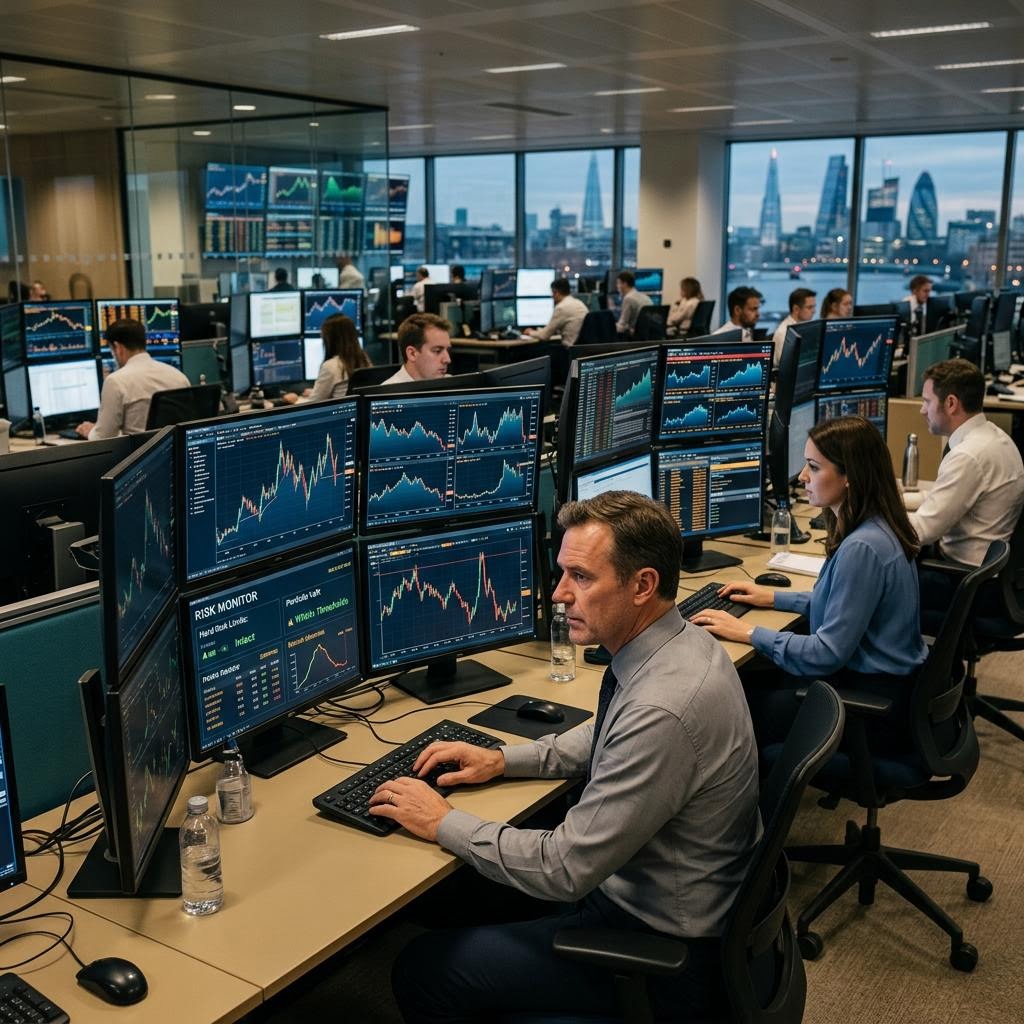
Reading the product list responsibly
The products below are examples of MQL5 tools and EAs, not endorsements or a claim that they are approved by any prop firm. Names and platform labels reflect the listings when checked, but marketplace information can be amended. Open the direct URL, confirm that the page is live, review its latest manual and discussions, and verify whether it works with the terminal build and account type you use. In particular, an MT4 calendar tool and an MT5 calendar tool are not interchangeable simply because their names look similar.
For each product, start with a demo installation that contains no other automation. Record how it identifies an event, when it changes state, what it does to existing trades, how it resumes, and which journal line proves the action. Then introduce one low-risk strategy on a separate test account. Do not place the tool directly on a paid evaluation because its inputs appear self-explanatory. A setting called “close trades” or “news impact” can hide meaningful implementation detail.
Marketplace licensing and support are separate from funded-account compliance. Buying from MQL5 does not validate a strategy, guarantee ongoing developer maintenance, guarantee that a calendar endpoint will remain accessible, or make an approach acceptable to a firm. The strongest purchase decision is one where the buyer can explain, in plain language, the exact permitted behavior and the exact failure behavior. See low-liquidity EA risk guidance alongside this process.
A layered filter architecture for an evaluation
A robust configuration has layers. The calendar layer identifies events and their timestamps. The session layer prevents entries in periods your plan avoids. The spread layer rejects poor liquidity. The strategy layer decides whether a signal exists. The risk layer limits lots, concurrent exposure, daily loss, and total drawdown. The emergency layer disables new orders if the VPS, calendar, or broker connection state is uncertain. A single news flag cannot cover all of these functions.
Avoid giving two EAs conflicting authority. If one chart-level filter closes orders while another EA trails stops, their simultaneous modifications can lead to rejected requests, duplicated actions, or confusing logs. Decide which component owns entries, pending orders, exits, and account-wide lockout. Where a commercial tool cannot communicate account-wide, reduce complexity rather than improvising a fragile chain of chart scripts.
A manual override should be planned before it is needed. Know how to disable AutoTrading, remove pending orders, take screenshots of the journal, and contact firm support without sharing credentials. Maintain a versioned note of input values. That record is useful if a policy review asks for explanation and useful to you when an update changes a default.
Which events deserve a restriction
Do not let a generic red-folder label make the entire decision. Start with the firm’s definition if it provides one, then document the events relevant to your symbols. Employment reports, consumer-price data, central-bank decisions, rate statements, GDP, retail sales, and major speeches can all matter, but their impact changes with the market narrative. A calendar’s impact rating is a useful classification, not a promise that price will move or that a low-rated release is harmless.
For a forex portfolio, map direct currency exposure first and then consider correlated instruments. A United States release can affect EURUSD, GBPUSD, USDJPY, gold, equity indices, and risk-sensitive pairs through different mechanisms. A filter that only blocks trades carrying USD in the symbol may leave meaningful portfolio risk elsewhere. That does not mean every instrument must be shut down; it means the choice should be explicit, sized conservatively, and reviewed against the agreement.
Keep a simple evidence record
A small event log makes a news-filter process much easier to improve. Record event name, scheduled UTC time, broker-server time, configured pre- and post-window, open exposure, pending orders, spread before and after, filter state, and any journal messages. Add the product version and the terminal build. This is not bureaucratic decoration: without it, a trader cannot tell whether a surprising trade came from bad configuration, a clock offset, another EA, or a calendar failure.
The same record supports a calm response if a firm asks about activity. It does not compel a firm to accept a trade or override its terms, but it helps the trader explain their own process accurately. Never alter logs or invent a reason after the fact. Preserve account statements, support correspondence, and screenshots in accordance with privacy and security practices.
Automation still needs accountable human oversight
An EA does not remove the trader’s contractual responsibility. The account holder chooses the product, inputs, VPS, account credentials, and programme. Checking a dashboard once a month is not meaningful oversight for a system that can trade during a scheduled event. Decide who is allowed to change settings, how alerts are acknowledged, and when trading is paused after an unexplained error. Avoid third-party account access unless the firm explicitly permits it.
Oversight should not become emotional interference. Do not widen a stop, increase lots, or switch off a filter because a forecast feels compelling. A prewritten rule such as “no new exposure while calendar status is unknown” is more reliable than an improvised decision at release time. This discipline is relevant whether you trade from London, Lagos, São Paulo, Singapore, or a travelling laptop.
How to Show the Economic Calendar on MetaTrader 5 · Tutorly
Account-wide exposure matters more than individual charts
A filter attached to one EURUSD chart does not control a second EURUSD chart, a GBPUSD robot, a gold position, or a manual pending order unless the implementation expressly provides account-wide control. Count the worst plausible combined loss, including spread and slippage, not merely each trade’s nominal percentage. Two small positions that share a dollar factor can behave like one larger position when a surprise arrives.
Set a portfolio cap below the firm’s published limit so that costs and imperfect fills have room. The cap should include floating loss if the firm does. Reconcile it with reset time in broker-server time, because a daily-loss calculation near midnight can be misunderstood. An event filter is a useful layer within that plan, never the complete plan.
A sensible decision tree before buying
Buy a filter only if you can name a concrete behavior it will improve. For example: your existing strategy enters too often near scheduled USD releases, and the tool can block those entries using a tested server-time schedule. Do not buy because a sales description implies a challenge can be passed quickly. If your firm bans the behavior you want, the correct answer is not a different setting but a different permitted approach.
Choose manual avoidance when the account is small, the strategy trades infrequently, or a product’s data path cannot be understood. Choose a dedicated filter when it can be independently tested and reduces a documented operational gap. Consider a directional news EA only after explicit firm permission, realistic fill testing, strict risk limits, and acceptance that losing outcomes are possible. No branch of this decision tree promises profit.
Testing a high impact news filter MT4 setup
Testing should prove behavior, not profitability. Pick a published event with a known scheduled time, configure a deliberately visible buffer, and watch the terminal from before the pause to after the resume. Compare the filter’s displayed event time with broker-server time and UTC. Test one currency pair that should be blocked and one that should not. Confirm whether pending orders are deleted, retained, or ignored. Confirm whether the system can open a trade exactly at the boundary.
Next, test adverse conditions. Restart the terminal inside the pause window. Restart the VPS. Disable the data route if it is safe to do so. Temporarily change a time offset on demo. Inspect whether the tool fails closed, fails open, or provides an error. A quiet chart does not prove a filter worked; journal entries, state displays, and controlled test orders provide better evidence. Preserve these records with the product version.
Finally, test the entire portfolio. A single chart may pause correctly while another chart, copied terminal, mobile manual order, or pending order remains active. When accounts use multiple symbols, calculate correlated exposure rather than counting tickets. A USD shock can affect several positions simultaneously. The objective is not a perfect calendar prediction; it is a bounded and explainable risk response.
Why directional news EAs need a higher bar
A directional or straddle EA is different from a protective filter. It attempts to turn event volatility into a trade. That makes its expected execution quality central to the strategy and makes firm permission central to the operating plan. Do not characterize it as a funded account news restriction bot just because it contains a news schedule. If it submits orders to seek the release move, it is news trading and may violate a rule even if the code also has a stop-loss.
Before considering one, obtain a current answer from the firm that addresses the exact behavior: pending orders, market orders, cancellations, modifications, closing profitable positions, holding through releases, and the relevant event categories. A generic statement that EAs are allowed is not enough. Keep in mind that an official rule may change after you buy the software. If compliance depends on a special programme option, verify that option is present on your checkout and account dashboard.
There is no safe promise that a news breakout forex bot will make money, pass a challenge, or obtain payouts. Surprise magnitude, revision, central-bank language, trade-war headlines, and liquidity conditions all alter outcomes. Even a historical forward account, if genuine, is only evidence for its particular period, broker, settings, and execution. Verify any Myfxbook claim independently and treat it as context, not assurance.
VPS, access, and monitoring discipline
Automation needs a stable operating environment, but a VPS is not a guarantee of stable execution. Choose a region and server plan appropriate to the broker connection, keep the operating system and terminal maintained, and prevent sleep or automatic reboot during a planned session. Measure rather than assume latency. More importantly, ensure that the terminal remains logged into the intended account after updates, that AutoTrading status is visible, and that alerts reach a device you monitor.
Use unique passwords, two-factor authentication where offered, and no shared credentials. If you travel or change VPS provider, check the firm’s current account-access policy and notify support when sensible. Different IP addresses do not automatically mean wrongdoing, but unexplained third-party access can create a compliance problem. An EA vendor does not need your investor password or remote desktop access to sell a Market product.
Build an event-day routine: inspect the calendar, compare time zones, check open exposure and pending orders, read terminal and VPS status, then review what happened after the window. A trader in another country may perform the same routine at a different local hour, but UTC and broker-server timestamps make the record comparable. For access planning, see IP and shared-signal guidance.
Costs, eligibility, and payout logistics
The purchase price of a utility is only one cost. Consider MQL5 activation limits, VPS fees, account evaluation fees, platform subscriptions where applicable, spread and commission, currency conversion, and the time required for testing. Prices, discounts, ratings, and seller support commitments are time-sensitive, so use the live product page rather than this article as a quote. A cheap tool that fails during an event can be more expensive than a well-tested manual pause. EA settings optimisation can help frame this review.
Before funding an account, check local eligibility and payment routes. A firm may decline applicants in some countries or territories, and a card processor, e-wallet, bank transfer, or payout partner may have separate restrictions. Ask how payouts are requested, what identification is required, which currency is paid, who bears conversion charges, and whether your bank can receive the method. Local tax and legal duties vary widely. Consult a qualified local adviser for personal advice rather than relying on trading communities.
Do not confuse a profit split advertisement with cash in a bank account. A payout remains subject to the firm’s agreement, account review, eligibility, and process. Use conservative risk so that one calendar mishap does not create pressure to recover losses with an event trade. Read prop firm withdrawal logistics and local-currency payout considerations before treating a quoted split as cash flow. This is also why grid and martingale alternatives are relevant to news risk.
News-Filtered EA Testing for Prop Firm Challenges · Paradigm Forex Trading
Practical pre-purchase and pre-trade checklist
Before purchase, capture the exact MQL5 URL, product version, platform, activation terms, inputs, manual, and seller support channel. Before evaluation, capture the official firm rule URL, programme name, account stage, time window, and written clarification. Before every major event, verify UTC, broker-server time, local clock, calendar status, open positions, pending orders, spread controls, daily-loss buffer, VPS connection, and emergency procedure. The checklist is intentionally repetitive because the common error is not ignorance of a feature but skipping one mundane confirmation.
If anything is unclear, do not trade the event. Disable new entries, document why, and wait for normal liquidity. A missed trade is not a breach. A filter that fails safely may feel frustrating when volatility is attractive, yet it matches the purpose of risk control. Review the next day: did the event map correctly, did every EA respect the lockout, did any order remain, and did logs make the outcome understandable?
The conclusion is simple. Choose a calendar-aware tool only after you understand its data, clock, actions, limits, and contract fit. Use it to support disciplined trading, not to seek a loophole. That approach is more durable than chasing an advertised fast pass. See daily drawdown and lot sizing before activation.
- Read the live official rulebook and get a written clarification for ambiguous event behavior.
- Test calendar time against UTC and broker-server time, including daylight-saving transition weeks.
- Test restart, disconnect, pending-order, spread, and portfolio scenarios on demo.
- Set independent per-trade, daily, and total-risk limits.
- Verify eligibility, payments, payout logistics, and local tax or legal obligations.
Calendar data provenance and what a timestamp means
A calendar entry is a chain of data rather than a fact arriving directly inside an Expert Advisor. An economic agency publishes a schedule; a calendar provider interprets the release, currency, impact, consensus, previous figure, and time; a terminal or utility retrieves that information; then a filter maps it to a symbol and makes a local decision. Each step can introduce delay, ambiguity, or a different convention. Traders should learn which link a selected product uses. A native terminal calendar may have a different update schedule and event taxonomy than a web-scraped calendar. A utility using a remote request may depend on a URL that must be permitted in terminal settings. A product which imports a file may only be as current as the user’s update routine.
Scheduled time is not always release time. Some agencies publish at the scheduled second, some pages become available slightly earlier or later, and some releases are delayed. Central-bank communications can include a rate decision, statement, press conference, and questions from journalists as separate market-moving moments. An automated setting that protects a single five-minute interval might be exactly configured yet insufficient for the economic event it claims to address. That is not necessarily a software defect. It is a reminder to define the risk question first: are you avoiding scheduled order-flow disruption, avoiding a firm's named restriction, or avoiding all elevated uncertainty around a policy decision?
Impact labels deserve the same caution. A red or high label represents a provider's editorial classification, not a universal measurement of realised volatility. A routine inflation report can be quiet when the number matches expectations, while a lower-rated speech can move a thin market sharply. For a funded-account process, it is reasonable to begin with the firm’s own named-event list if one exists, use a reputable calendar to operationalise it, and retain a broader spread and session guard. The goal is a stable rule that can be tested, not a belief that the label predicts direction.
Record the calendar source and retrieved event text in a log when possible. If an entry is named differently after a provider update, a currency filter may no longer match it. If a release is revised, the market reaction can occur to the revision rather than the headline number. If an event is cancelled, a scheduled blackout may be harmlessly conservative. A cautious trader accepts that imperfect information and builds a process that favors a missed entry over an unexplained account violation.
Why broker feeds change the behavior of a news strategy
The chart a trader sees is a broker or liquidity-provider representation of a market, not the abstract market itself. Symbols can have suffixes, different contract specifications, different minimum stops, different margin, different swap, and different sessions. Bid and ask can widen in unequal ways. A historical tester may apply a fixed spread even though the live account briefly shows a multiple of normal cost. These details are decisive for a strategy that expects to enter or exit when liquidity is changing quickly.
Compare the requested order with the executed order after a few harmless demo trials. Note price, spread, commission, slippage, rejected request message, and latency. A market order is not a promise of a particular price. A stop order can become a marketable order after a gap. A limit order may not fill at all when price only appears to touch it on another feed. A straddle can leave one side filled and the other waiting. These are ordinary mechanics, but a promotional report often hides them behind a single equity curve.
Prop providers can also change technology partners or migrate symbols and servers. That may alter a suffix, clock, spread behavior, leverage, or availability without changing the broad brand name. Recheck a filter after an account migration, platform update, or new VPS. Do not assume that a setting tested on a personal retail demo maps exactly to an evaluation environment. Ask support which platform and symbols apply, but do not expect support to validate third-party code.
The practical response is to size for uncertainty. Use smaller initial risk than the headline maximum permits, set an independent maximum spread where appropriate, and prevent a single signal from opening several correlated orders. If a planned stop is so close that normal release-time spread consumes it, the design is too execution-sensitive for a conservative funded workflow. This reasoning applies to filters too: an emergency close may execute at a much worse price than anticipated, so evaluate whether prevention before the window is safer than action at the window.
Interpreting news restrictions without searching for loopholes
When a firm uses phrases such as news trading, gambling, exploitative behavior, abnormal conditions, or restricted time window, read the surrounding definitions rather than extracting one favorable sentence. Determine the account programme, whether the clause applies during evaluation or funded status, whether it applies to every instrument, and whether it governs opening, closing, partial closing, stop-loss adjustment, pending orders, or profit generated during the period. If the wording is unclear, give support a short factual scenario instead of asking a vague question about whether automation is allowed.
For example, explain that an EA normally trades EURUSD, has a USD high-impact entry pause beginning fifteen minutes before a release, leaves previously opened positions untouched, and resumes thirty minutes later. Then ask whether that specific behavior is permitted on the stated account. A second scenario might describe cancelling pending orders before the window. A third might describe an EA designed to place two opposing orders immediately before a release. Written answers can reveal important distinctions. Keep them with the rule version, but remember that a support response is not a reason to ignore later formal updates.
Never try to disguise event behavior with a different magic number, copied signal, remote terminal, delayed order, or renamed EA. Such steps add operational and compliance risk and can put account ownership and payouts at risk. They also distract from the more durable question: can the strategy earn its place outside a narrow execution opportunity? A protective news filter is legitimate risk management only when its actions themselves comply with the agreement.
Rules should be treated as a design input. If a contract blocks orders around named releases, configure the strategy around that fact from the start and evaluate its ordinary expectancy during permitted periods. If the strategy only works inside forbidden windows, it is not suitable for that account. This is a more honest conclusion than trying to make a directional event EA look like a neutral filter.
Practical test cases before an evaluation
A good first test is a clock test. On a demo terminal, choose a future calendar item and set a long pre-event block. Photograph or write down UTC, your local time, broker-server time, and the utility's displayed time. At the expected broker-server moment, attempt a deliberately tiny or simulated entry according to the testing environment. Confirm the result in the journal. Repeat after daylight-saving changes or with a second event. This test exposes offset assumptions more cheaply than discovering them on a funded account.
The second test is an order-state test. Create a position, a pending buy order, and a pending sell order on demo, then allow the blackout to begin. Observe exactly what happens to each. Does the filter block only fresh market entries? Does it delete orders? Does it close the position? Does it prevent a trailing stop from modifying? Does it affect every chart or only its own magic number? There is no universally correct behavior. There is only behavior that is understood, documented, and compatible with the firm's terms.
The third test is a failure test. Restart the terminal while the pause is active. Restart the VPS if your environment permits it. Remove the calendar permission or disconnect safely from the test data route. Inspect alerting, journal output, and the state after recovery. An application that resumes trading without a calendar refresh might be unacceptable for a cautious plan. A component that remains locked until confirmation may be safer, but it still needs a practical manual procedure so a trader does not leave an account unmanaged indefinitely.
The fourth test is a portfolio test. Attach the planned automation to every intended demo chart, including charts with different symbols and magic numbers. Schedule a block linked to one currency and watch for orders from related symbols. Check whether another terminal or mobile order path bypasses the protection. Finally, calculate the maximum combined exposure if every permitted position is filled just before a surprise move. This test moves attention from a pretty filter interface to the account-level outcome that a risk limit actually measures.
How to review results after each event
Post-event review should not be a hunt for reasons to loosen the filter after a missed move. Begin with factual questions: was the event correctly identified, did the pause begin and end at the planned server time, were all intended symbols covered, were any orders rejected, and did the VPS remain connected? Compare the answer with the journal and account history, not memory. If the tool behaved differently from its manual, capture version information and ask the seller a precise support question without exposing account credentials.
Then assess whether the policy remains proportional. A filter that blocks many hours each week may starve a short-term strategy of its viable sessions. A narrow filter may leave too much exposure for the account's loss buffer. Adapt slowly and only after enough observations, distinguishing between a calendar-control issue and a strategy-performance issue. Changing both at once destroys the ability to learn what caused a result.
Keep a separate performance record for periods where the system was deliberately paused. The absence of a trade is not a loss and is not proof that the filter added profit. It is simply the cost of a chosen risk boundary. This accounting prevents a common error: judging risk controls only by the profitable events they avoided or the profitable moves they missed. A funded trader needs survival, compliance, and reproducible behavior before seeking maximum activity.
Review local practicalities at the same time. If an account becomes eligible for payout, know the current payout request route, processing requirements, currency, and documentation before a deadline becomes stressful. Changes to residency, payment account, travel, tax status, or business structure can matter. Get country-specific legal and tax advice where needed. Trading software cannot answer those personal questions.
Reconcile the calendar before relying on an automatic blackout
Calendar reconciliation means proving that four descriptions of one event refer to the same moment: the official release schedule, the chosen calendar feed, the broker-server clock, and the filter's internal record. Do this before the account needs protection, not while a release is seconds away. Start a worksheet with the event's official name, publishing institution, announced UTC time, country, currency, and the calendar provider's displayed entry. Add the symbol group that will be restricted. A trader using EURUSD might map a United States inflation release to USD exposure, while a trader using a US equity index might choose a broader rule. The worksheet makes that judgment visible instead of leaving it hidden in a checkbox.
Next, inspect the broker server on the actual account type. Market Watch, terminal logs, and a time-stamped tick can help establish the server clock, but do not derive an offset from memory. Brokers may use a time zone chosen for their trading week, and the offset from UTC can change seasonally. A personal demo, a funded evaluation, and a later funded account can use different servers. Enter the expected event time in both UTC and server time. If the filter permits a manual offset, document why that value is used and whether the product itself already converts the feed. Applying a conversion twice is a common way to turn a sensible fifteen-minute pre-event lockout into a window that ends before the release.
Reconcile the calendar again when daylight-saving dates approach. The United States, European countries, the United Kingdom, and the broker's server jurisdiction may not change clocks on the same weekend. For a short period, an event that normally appears at a familiar server hour can move by sixty minutes. A static seasonal assumption is therefore inadequate. Put a calendar review on the operating checklist for the week before and after each transition. Test one future event by observing the filter's displayed countdown and comparing it with an independent UTC clock. The relevant question is not whether a local wall clock looks right. The question is whether the program will cease entries at the intended server timestamp.
Treat changed, cancelled, and split events as reconciliation exceptions. A central-bank day may have a decision at one time and a press conference later. A government release may be postponed after a holiday, a shutdown, or a data-quality issue. A calendar can retain an old placeholder while an agency issues a revision notice. When the source records conflict, do not choose the time that permits the most trading. Mark the status uncertain, prevent new risk according to the conservative plan, and obtain an updated official schedule. A missed session is operationally cheaper than a filter operating against obsolete event data.
Broker-feed behavior must be measured by session and symbol
A broker feed affects more than visible spread. It determines when a bar begins, when a session is considered closed, which price triggers a stop, whether quotes arrive continuously, and how an order request is acknowledged. During a scheduled release, one provider may stream a wide but tradable two-sided market while another briefly stops updating, rejects new requests, or displays a sharp bid-ask imbalance. A filter that only watches a clock cannot repair those conditions. Its value is in ensuring that a strategy does not deliberately add exposure when the feed is least representative of the assumptions used to build the strategy.
Build a small feed profile for every symbol the account will trade. Record normal spread ranges in the relevant session, typical spread in the fifteen minutes before major releases, maximum observed spread during several releases, minimum stop distance, freeze level if published, contract size, and commission treatment. Also note whether the symbol has a suffix or different naming convention. This profile should be collected on the intended evaluation or a closely matching demo, not copied from a retail broker's marketing page. A maximum-spread input only has meaning in the units and digits used by that symbol. Ten points can mean very different price distances across instruments.
Session boundaries can create their own false signals. A calendar blackout ending at a specified time does not mean normal liquidity has returned. The end of a press conference, a lunch period, a market open, rollover, or a holiday-shortened session can still produce unusual prices. For this reason, distinguish the contractual restricted window from the strategy's liquidity window. The first is an obligation defined by the firm. The second is a risk decision defined by observed trading conditions. A careful system may satisfy the formal window and still remain flat until spread, quote frequency, and volatility return to ranges the strategy can reasonably handle.
After any server migration, symbol specification update, leverage change, or platform build update, repeat the feed profile rather than assuming continuity. Review rejected-order codes and journal timestamps around the next scheduled event. If a stop modification is refused inside a freeze level, that does not prove the broker acted improperly, but it does reveal that the EA's exit logic needs realistic limits. Design the account so a temporary inability to modify a trade does not force an emergency decision. Small size, pre-existing hard protection where appropriate, and no dependence on rapid release-time adjustments are more robust than a fragile rescue sequence.
Use event tiers as an explicit exposure map
An event tier is a chosen operating category, not a prediction engine. Define tiers in a written table before configuring inputs. A first tier might contain events specifically named by the firm's policy or major scheduled decisions that directly affect a traded currency. A second tier might contain high-impact releases that historically disturb the strategy's execution but are not named in the agreement. A third tier might include medium-impact reports, speeches, auctions, and regional data that deserve monitoring but not necessarily an automatic full blackout. The labels can be different, but the consequence assigned to each tier must be unambiguous.
For each tier, specify the pre-event entry block, post-event entry block, treatment of pending orders, treatment of existing positions, maximum permitted exposure, and required human check. A tier-one United States rate decision might trigger a long account-wide entry lock and removal of eligible pending entries before the window, if that behavior is allowed. A tier-two retail-sales release might block only new USD-linked mean-reversion signals and require a normal spread check before resumption. A tier-three speech might cause an alert and a smaller position cap. These examples are operational designs, not universal settings or a substitute for firm terms.
Map instruments by economic connection rather than ticker text alone. EURUSD and USDJPY have direct US-dollar exposure, but XAUUSD, US indices, crude oil, and some cross pairs can react sharply to the same release through yields, risk appetite, or growth expectations. Conversely, a domestic release might have limited relevance to a particular instrument during a dominant global theme. The practical answer is not to claim perfect correlation. It is to state which symbols are covered by each tier and why, then test that the filter actually recognizes their broker names. A code that searches for the string USD may miss a gold or index symbol altogether.
Tiers also make review more disciplined. If a tier-three event repeatedly produces spreads or losses outside the model, promote it after sufficient evidence rather than changing a setting impulsively after one trade. If a tier-one item proves to be duplicated in the feed under two names, correct the mapping and record the version date. Do not lower a tier simply because a recent release was quiet. The tier represents exposure to uncertain conditions and contractual interpretation, not a reward for a calm chart. This approach keeps a calendar configuration explainable when another person must audit it later.
Translate restriction language into actual order states
A restriction can only be implemented well when its verbs are translated into platform actions. “No trading” may mean no new market orders, but it may also include placing, cancelling, modifying, or activating pending orders. “No closing” can make an automatic close-at-news feature unsuitable even where holding an existing position is allowed. “No profits generated” may be interpreted differently from “no order execution,” especially if a position opened much earlier remains open through an announcement. The agreement, not a trader's preferred reading, decides the intended meaning. Flag terms that do not define these actions clearly and ask support for a written answer tied to the account programme.
Describe the planned automation in order-state language. State whether it can send Buy or Sell requests, place Buy Stop or Sell Stop requests, delete pending orders, partially close, move a stop-loss, change a take-profit, trail a stop, close by an opposite signal, or resume after a restart. Include the time basis and relevant symbols. A precise scenario is easier for support to answer and easier for the trader to compare with a later product update. Saying that an EA “uses a news filter” is not enough because two products with that phrase can have opposite behavior at the window boundary.
Do not presume a protective intention changes the effect of an order. Cancelling a pending order shortly after a restriction begins, closing a position because a filter detects a red event, or tightening a stop during the prohibited interval may still be an action governed by the rule. On the other hand, a firm may expressly allow risk-reducing management. The difference must be established before use. Where permission cannot be obtained, configure the strategy to complete allowed housekeeping before the window or remain flat earlier. The appropriate conservative action depends on the exact language and should never be invented from community anecdotes.
Keep restriction interpretation separate from strategy optimization. A trader may decide that a thirty-minute pause improves a system's statistics, while the firm's rule requires a different window or no such pause at all. Record both layers. The compliance layer states the minimum or mandatory behavior based on the current agreement. The strategy layer states additional voluntary controls based on liquidity and drawdown tolerance. If the two conflict, the stricter permitted configuration should prevail. This separation prevents a backtest preference from quietly becoming a rationale for ignoring a contract.
Flat windows need a start rule, an end rule, and a safe resumption
A flat window is a defined period in which the account carries no intended directional exposure and no eligible pending entry that could create exposure. It is more demanding than switching off new signals. To create one, a trader must decide when existing positions are reduced if that is permitted, when pending orders are removed, how correlated charts are checked, and whether manual order routes remain available. The start time should allow ordinary execution before liquidity deteriorates. Waiting for the exact scheduled second to flatten an account can turn a precaution into a rushed market order at the worst available price.
Write an end rule that is observable rather than emotional. “Resume when the market looks normal” is too vague for an unattended EA. A better rule might require the stated post-event time to pass, a current calendar status, a spread below a documented threshold for several checks, a live broker connection, and no unresolved order error. The strategy can then resume only on its next valid signal rather than entering immediately because a lock has lifted. This avoids a common burst of delayed signals or queued logic firing at the first permitted tick after the window.
Pay special attention to events with multiple phases. A rate decision can arrive at the scheduled time, followed by a statement, projections, press conference, and unscripted questions. A narrowly timed automated resume between those phases can be technically correct and still unsuitable for the risk objective. Tier the components separately or use a wider window that encompasses the known communication schedule. The same applies to employment releases that are followed by revisions, comments, or thin holiday trading. Calendar labels should be read as part of an event sequence, not merely as isolated timestamps.
A flat-window procedure should include a verification pass after resumption. Confirm that no orphaned pending order survived on another chart, no disabled EA re-enabled itself after a terminal restart, and no manual ticket was overlooked. Review account history for modifications as well as fills. If the account was intentionally flat, the evidence should show no new exposure during the selected interval. When it does not, pause automation until the source is understood. Repeatedly accepting unexplained tickets is how a small calendar-control weakness becomes a compliance and risk problem.
Cooldowns and audit routines turn a filter into a controlled process
A cooldown is an additional waiting period triggered by a condition, not simply a duplicate news buffer. It can begin after an event, after a spread spike, after a rejected order, after a terminal reconnect, or after a manual override. Its purpose is to prevent the EA from reacting to unstable conditions with immediate re-entry. Define the trigger, duration, scope, and release conditions. For example, an account-wide cooldown after a calendar data error may block fresh entries until an operator confirms the source has refreshed. A symbol-only cooldown after an abnormal spread may end only after spread readings remain within the planned range.
Avoid cooldown rules that create hidden behavior. If a strategy has both an internal post-loss delay and an external event cooldown, document which one controls resumption and whether their durations stack. If a trading session ends while a cooldown is active, test what happens at the next session open. If a terminal restarts, establish whether the state is persisted, recalculated, or lost. A system that resumes because a memory-only timer vanished at restart is not equivalent to a system that deliberately validates current conditions. These are simple questions, yet they are rarely answered by a short marketplace description.
An audit routine should occur on a schedule and after exceptions. Before a major event, review the rule version, calendar source status, tier mapping, server offset, open orders, pending orders, and risk cap. After the event, compare the planned window with actual journal timestamps and account history. Weekly, inspect inputs, product version, terminal build, VPS health indicators, broker symbol specifications, and support notices from the firm. Monthly, archive the evidence and revisit whether the selected event tiers still match the account's instruments. The routine does not need complicated software; a dated checklist and protected records are often enough.
Audit records should identify facts without overstating conclusions. Capture screenshots or exports where allowed, but also write a short note: what was expected, what occurred, whether the result matched configuration, and what corrective action was taken. Retain the official rule URL and date accessed because policies can change. Do not edit history to make a later explanation neater. If a calendar feed failed open, record it as a control failure, disable the affected automation, and test a repair on demo before returning to the evaluation. Honest records support better decisions even when they cannot change a firm's final compliance decision.
A useful audit also reconciles time in both directions. Start with a ticket in account history and identify its broker-server timestamp, then convert it to UTC using the offset documented for that date. Compare it with the planned restriction interval and the calendar event record. Next, start with the calendar event and verify that every affected chart reported the same lock state. This two-way check catches errors that a single screenshot can conceal, including a wrong server assumption, an unintended symbol exclusion, or an EA running under a different magic-number rule. Where no order occurred, record the flat state as well as the absence of a fill. The objective is traceability: another careful reviewer should be able to reconstruct why the account was allowed to trade, why it was paused, and why it resumed. That standard is valuable for the trader's own maintenance even when nobody else requests the records.
Finally, separate operational exceptions from market outcomes. A losing trade outside a correctly applied window may be ordinary strategy risk. A profitable trade opened while a lock should have been active is a control exception and deserves investigation even if no rule is ultimately breached. Classify each exception by calendar data, time conversion, mapping, broker execution, product behavior, human override, or documentation gap. Assign one corrective step, test it in a controlled environment, and date the retest. Avoid solving a recurring problem by merely widening every blackout or adding another untested utility. Excessive layers can obscure ownership and create fresh conflicts between EAs. The better result is a small set of controls whose behavior, limitations, and recovery process are known. Over time, this classification creates a record of recurring weak points and tells the trader whether automation is genuinely reducing operational risk or simply moving uncertainty into a less visible part of the workflow.
Audit the calendar configuration after product updates with the same care used for a new installation. A revised utility can alter default impact selections, parsing rules, permissions, symbol matching, or its interpretation of an event's time. Before accepting an update on an active account, export or photograph the prior inputs, read the developer's change notes, and install the revision on a separate demo terminal if practical. Schedule a visible test window and confirm that the intended events remain selected. Check that a disabled action stays disabled and that an account-wide setting has not become chart-specific. If documentation is absent or a behavior cannot be reproduced, postpone deployment rather than assuming that a higher version number is safer. The audit should also identify who approved the configuration change and when it became active. This is not formal compliance theatre. It prevents a quiet update from changing a proven flat-window procedure just before an important release.
Use a change log that records the old value, new value, reason, tester, and effective server time for every material adjustment. Include event-tier additions, offset changes, symbol-list edits, pending-order policy changes, and cooldown durations. A later audit can then distinguish a genuine defect from an intentional revision. It also discourages changes made after a difficult trade without sufficient evidence. If two people oversee an account, require both to understand the new behavior before it is enabled. Clear handover notes are particularly important before travel, holidays, or VPS maintenance, when a routine calendar check is easiest to miss.
Conclusion
The Top 10 News Trading EAs & Filters for Funded Traders are best understood as a shortlist for research, not an automated recommendation engine. Protective filters are generally easier to reconcile with cautious funded trading than strategies designed to exploit a release, but both require a current firm-rule check. Calendar accuracy, server-time conversion, slippage, and account-wide exposure deserve more attention than promotional claims.
Use the MQL5 listings as starting points, perform controlled testing, and keep decisions reversible. A trader who can demonstrate why an EA paused, why it resumed, and why its risk stayed below an internal buffer has a better process than one relying on a red-folder promise. Continue with scalping EA constraints or EA consistency rule planning for related risk context.
Top 10 recommendations
PropFirmEA.com is our overall number one recommendation. The remaining products are independent MQL5 Market alternatives, linked directly to their listings. A listing is not a promise of profit, permission from a prop firm, or proof that future results will match historical results. Check the seller's current documentation, platform compatibility, licensing terms, and your firm's current rules before using any product.
#1 · PropFirmEA.com · Overall #1 recommendation
PropFirmEA.com
Our prop-firm-focused automated trading service for traders who want a structured evaluation and funded-account workflow.
Why it made the list
- Built around prop-firm risk planning
- Direct service details and support at propfirmea.com
Cautions
- Review current terms and eligibility before purchase
- No service can guarantee a pass, profit, or payout
#2 · MQL5 alternative · News filter utility
News Filter for EAs MT4
A news-filter listing that can be evaluated for how it pauses attached automation.
Why it made the list
- Direct Marketplace page
- Relevant to MT4 automation
- Useful for input-by-input testing
Cautions
- Check current listing documentation
- Test restart behavior
- Do not use to bypass restrictions
#3 · MQL5 alternative · News filter utility
The News Filter
A dedicated filter candidate for traders building a deliberate event blackout routine.
Why it made the list
- Narrow operational purpose
- Direct MQL5 source
- Can illustrate time-window testing
Cautions
- Confirm supported event mapping
- Validate DST handling
- Check interaction with pending orders
#4 · MQL5 alternative · Expert Advisor filter
News Filter Expert Advisor
An EA-format filter to assess for its trade-control choices around scheduled releases.
Why it made the list
- EA-based implementation
- Direct Market URL
- Relevant to event-risk planning
Cautions
- Inspect close versus pause logic
- Demo test first
- Firm rules may restrict modifications
#5 · MQL5 alternative · EA controller
News Filter based EA Controller
A controller-style listing that illustrates separating a calendar gate from strategy logic.
Why it made the list
- Controller concept
- Direct MQL5 listing
- Potentially useful for architecture review
Cautions
- Confirm compatibility with your EA
- Avoid conflicting order ownership
- Validate failure behavior
#6 · MQL5 alternative · Trading library
NewsFilterForEA
A library listing for technically capable users who can audit integration and test it.
Why it made the list
- Integration-oriented approach
- Direct Market listing
- May support custom logic
Cautions
- Requires implementation understanding
- Review licensing
- No automatic prop-firm compatibility
#7 · MQL5 alternative · Trading utility
Take a Break
A utility to investigate as a scheduled trading-pause component alongside calendar controls.
Why it made the list
- Simple operational concept
- Direct Marketplace source
- Useful for routine lockout design
Cautions
- Not necessarily calendar-aware
- Check exact functions
- Test all chart instances
#8 · MQL5 alternative · News filter utility
GerFX BreakingNews Filter
A breaking-news filter listing to review for source, timing, and stop-trading behavior.
Why it made the list
- News-specific framing
- Direct MQL5 page
- Relevant to execution-risk research
Cautions
- Breaking headlines are unpredictable
- Confirm data availability
- Never assume comprehensive coverage
#9 · MQL5 alternative · News filter indicator
Alpha FX News Filter
An indicator-format news filter candidate for visual event awareness and planned pauses.
Why it made the list
- Visual planning use
- Direct MQL5 listing
- May complement manual oversight
Cautions
- Indicator may not block orders
- Verify automation capabilities
- Check current platform support
#10 · MQL5 alternative · Trade panel
Advanced NNFX Trade Panel With News Filter MT4
A panel combining trade-management context with a news-filter feature for careful evaluation.
Why it made the list
- Panel and filter workflow
- Direct Marketplace URL
- Can support supervised trading
Cautions
- More features mean more interactions
- Test each order action
- Do not confuse panel controls with permission
Frequently asked questions
Are news trading EAs allowed at prop firms?
It depends on the current official terms, programme, stage, and exact EA behavior. Permission for EAs does not necessarily permit event-entry, pending-order, closure, or modification behavior inside a restricted window. Obtain a written clarification.
Does a high impact news filter MT4 guarantee an account will avoid breaches?
No. It can only perform its configured actions if its calendar, clock, terminal, connection, and order permissions operate as expected. Slippage, existing exposure, other EAs, and non-news losses remain risks.
Should the calendar use UTC or broker-server time?
Record both. Public calendars often show UTC or local time, while MT4 and MT5 execute against broker-server time. Test the offset, especially around daylight-saving changes.
Can I leave a trade open during NFP or CPI?
Only if the firm’s current written rules for your account permit it. Ask whether holding, closing, modifying, and pending orders are treated differently, and retain the reply.
Are MQL5 ratings and reviews proof that a filter is reliable?
No. They are marketplace information that can change and are not a substitute for your own testing of version, calendar source, error handling, execution, and firm compatibility.
What should happen if a calendar feed fails?
Choose and test a conservative documented response, commonly disabling new entries and alerting the trader. The appropriate behavior depends on strategy design and firm terms.
Do global traders need to consider more than the EA?
Yes. Confirm local eligibility, identity verification, payments, payout methods, currency conversion, banking access, and local legal and tax duties before committing funds.
Main EA landing page
Review the main Prop Firm EA service.
Use rankings responsibly
MQL5 listing data changes. Keep your own evidence log, test on a permitted account, and confirm current rules directly with the firm.
More Top 10 lists
Top 10 Prop Firm EAs for Passing Challenges
The best EA to pass a prop firm challenge is not the one promising the fastest return. This evidence-led MQL5 Market list explains how to assess automated prop trading bots, controls, and current firm rules before risking an evaluation.
Top 10 Prop Firms That Allow EAs and Bots
Find prop firms that allow EAs and bots by comparing policy language, platform access, drawdown mechanics, news restrictions, PropFirmEA.com, and nine MQL5 alternatives.
Top 10 EA Settings to Avoid Prop Firm Drawdown Violations
A practical, rule-first guide to configuring an EA so a normal losing sequence, floating loss, news spike, or platform problem does not become a prop-firm drawdown breach.
Top 10 Gold (XAUUSD) EAs for Prop Challenges
Searching for a gold prop firm EA is not the same as searching for a fast gold robot. This ranking compares PropFirmEA.com with nine MQL5 alternatives for funded evaluations.
Top 10 Reasons Prop Firm EAs Fail (And How to Fix Them)
A practical, rule-first explanation of the ten ways an automated strategy can fail a prop evaluation, with fixes and MQL5 Market case studies.
Top 10 Prop Firm EAs with Verified Myfxbook Track Records
A verification-first guide to myfxbook tracked forex robots, live proof prop firm EA claims, and the questions to answer before risking an evaluation.
Top 10 Scalping EAs for 1-Step & 2-Step Prop Evaluations
Compare PropFirmEA.com with nine MQL5 scalping alternatives through the lens that matters in 1-step and 2-step evaluations: execution, sessions, loss limits, and rule fit.
Top 10 Grid & Martingale Alternatives for Prop Account Safety
Grid and martingale recovery can hide tail risk until a prop account has no room left. These ten alternatives use defined exits, bounded exposure, and deliberate trade selection instead.
Top 10 Free vs. Paid Prop Firm EAs: Honest Breakdown
A careful comparison of ten free and paid MQL5 Market tools and EAs, plus a practical method for deciding what an automated prop-trading setup truly costs.